
Storage Ideas for Small Spaces

✨ Updated July 2026 — reviewed for accuracy and freshness.
Small-space storage is less about clever products than about a few principles that decide whether any of them stick. Height you are not using, dead zones nobody thinks to measure, and the difference between containing things and merely hiding them explain most of the wins. They also explain why a beautifully organized cupboard falls apart within a month.
Key Takeaways
- Go up, not out — the wall above door height is usually the largest unused surface.
- Hunt the dead zones — behind doors, under beds, above cabinets, beside appliances.
- Containment beats concealment — a labelled bin sized to its contents actually works.
- Systems fail on friction — if putting things away takes several steps, it will not happen.
 (Pic Courtesy)
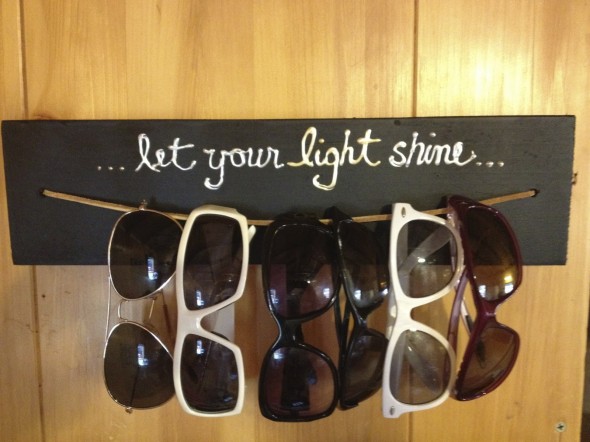
 Show off your glasses in style, spruce up the empty wall with a cool display. Swipe a wooden coat hanger from your wardrobe and hook your specs, decorative and help you to save glasses from scratches. Pic Courtesy
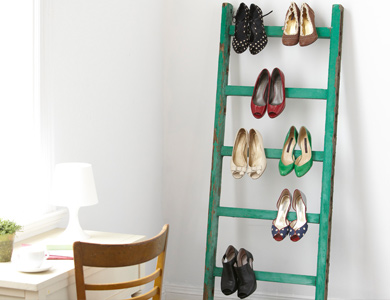
 Get your shoes out of the hiding, cling them to a vintage ladder. Show them off in a cute way, not only it will de-clutter your wardrobe but also gives your corner required colorful update. Pic Courtesy
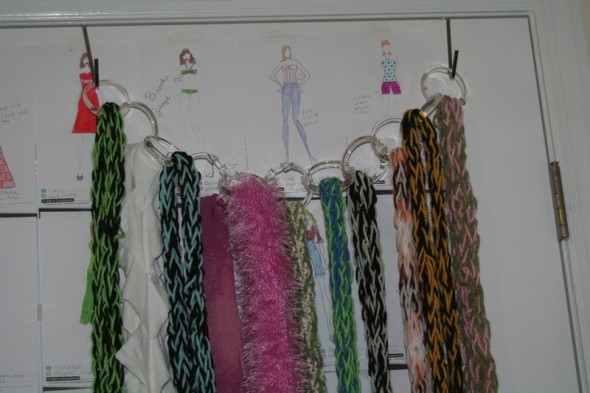
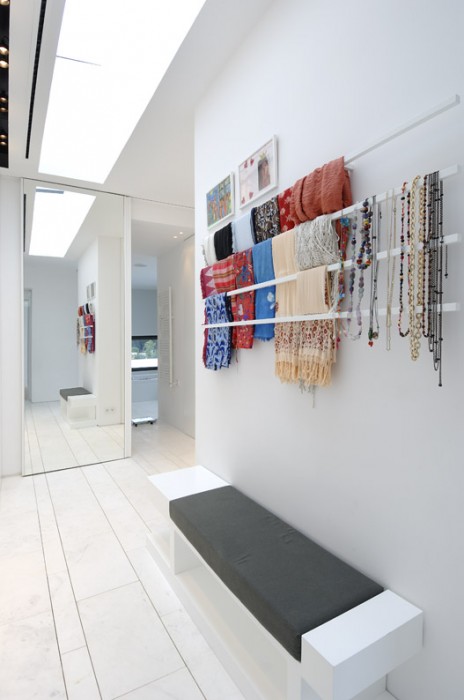
 Hang pretty scarves up to look like fancy artworks, not only does the trick give a blank wall a little love, it also prevents delicate silk scarves getting snagged on to jewelery while they are stashed away in wardrobe. Pic Courtesy
 (Pic Courtesy)
 Grab some jam jars, cold drink bottle and stick the lids to the underside of a shelf to create an easy to see protective jewelry holder. You can also some cotton in the mason jars to keep your expensive pieces safe and beautiful. Pic Courtesy

The Principles Behind Small-Space Storage
Start by claiming height. In most rooms everything lives between knee and shoulder level, which leaves the band of wall above door height completely unused, and that is often the single biggest untapped surface in the place. Take shelving up to within a few inches of the ceiling, use the top level for things you touch once or twice a year, and keep a step stool nearby so the height is genuinely usable. Tall and shallow beats short and deep in a tight room: a twelve-inch-deep unit that reaches the ceiling holds more than a chest twice as deep, and it keeps floor space free, which is what actually makes a room feel bigger. Anything tall must be anchored to the wall, and nothing should ever block a window or the route out of a room.
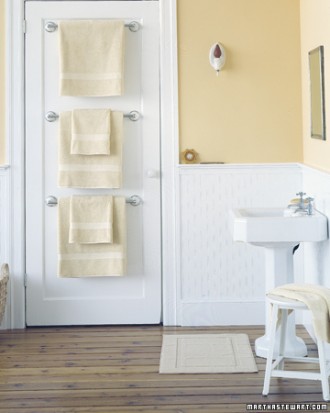
Then go looking for dead zones, because every small home has several. The back of doors takes hooks and slim racks. Under the bed holds flat boxes if you have around six or seven inches of clearance, more with risers. The space above kitchen cabinets, the narrow gap beside a fridge or washing machine, the inside faces of cabinet doors, the stair risers, the wall over a toilet, and the corner where two runs of shelving meet are all storage nobody counted. Measure them with a tape rather than by eye, since a four-inch gap holds a surprising amount when you find the right container for it.
Next, separate containment from concealment. Concealment moves clutter behind a door; containment gives every category a boundary sized to it, so you can see when it is full and when something does not belong. Choose containers slightly smaller than the pile you have, because a bin bigger than its category simply invites the category to grow. Label things even in your own home, use open bins for anything used daily and lidded boxes only for genuine long-term storage, and keep each category stored where it is actually used rather than where there happens to be space.
Finally, understand why systems collapse, because it is almost never a lack of willpower. Systems fail on friction: if putting an object away means lifting a lid, moving a box, and opening a door, it will end up on a chair instead. Aim for one easy motion, one hand, no unstacking. They also fail without a discard rule, so adopt one in, one out for categories that grow, and give every incoming category a home on the day it arrives. Review the system seasonally, and treat anything that keeps ending up in the wrong place as a design problem rather than a personal failing.
Frequently Asked Questions
How do you use vertical space without making a room feel smaller?
Keep vertical storage shallow and continue it to the ceiling, so it reads as architecture rather than as furniture parked against a wall. Painting shelving the same color as the wall helps it recede. What makes a room feel small is clutter on the floor and on surfaces, so trading floor pieces for height usually feels more open.
Where is the wasted storage space in a small apartment?
The most commonly missed spots are the wall above door height, the back of every door, the inside of cabinet doors, above kitchen cabinets, the gap beside a fridge or washer, and the area over a toilet. Under the bed is the biggest single volume in many homes. Measure each with a tape, because narrow gaps hold more than they look like they do.
Should storage be open or hidden in a small room?
Use open storage for things you reach for daily, since fewer steps means it actually gets put back, and closed storage for visual calm and long-term items. A room that is entirely open looks busy, and one that is entirely closed hides problems until a cupboard overflows. Mixing the two, open at working height and closed above or below, works best.
Why do organizing systems stop working after a few weeks?
Usually because putting things away takes too many steps, or because containers are larger than the categories they hold and quietly absorb more stuff. Storing something far from where it is used has the same effect. Fix it by reducing each put-away action to one easy motion and adding a simple one in, one out rule.
How much should you store under a bed?
As much as fits in flat, shallow boxes within the clearance you have, typically six or seven inches, or more if you add risers. Keep it to seasonal clothing, spare bedding, and luggage rather than things you need weekly, and use lidded boxes to keep out dust. Leave a little air around the boxes so the floor stays easy to clean.
Related Posts
Comments (0)
No comments yet. Be the first to comment!