
Living Room Decoration Ideas for Winters

✨ Updated July 2026 — reviewed for accuracy and freshness.
Winter decorating is a swap rather than an addition — the same room, relayered. Heavier weaves, more texture, and warmer light placed lower in the room do more for comfort than another armful of cushions, and everything you bring in should have somewhere to go in spring. Here is what to bring out, what to box up, and how to keep cozy from tipping into cluttered.
Key Takeaways
- Swap, do not stack — box up the summer textiles before the winter ones come out.
- Texture over pattern — three weaves in one quiet palette read warm, not busy.
- Warm bulbs, placed low — 2700K light at seated height beats any extra blanket.
- Contain the cozy — a basket for throws and a tray for candles keeps warmth tidy.
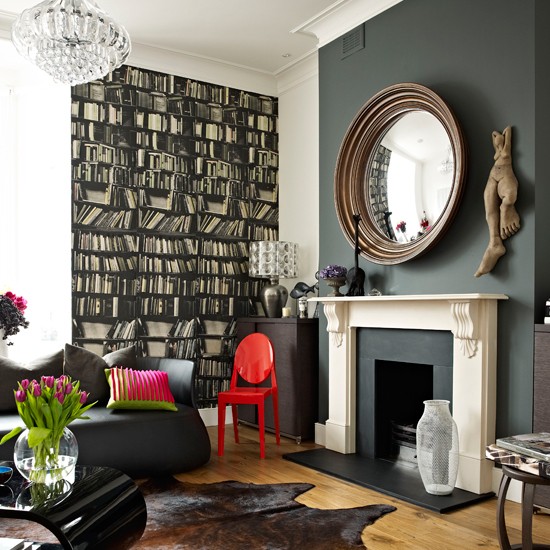 Try a retro feel with pendant lights, cozy for winters with woolen accessories and paneled texture. Combining grey shades with deep blue gives it a complete look.
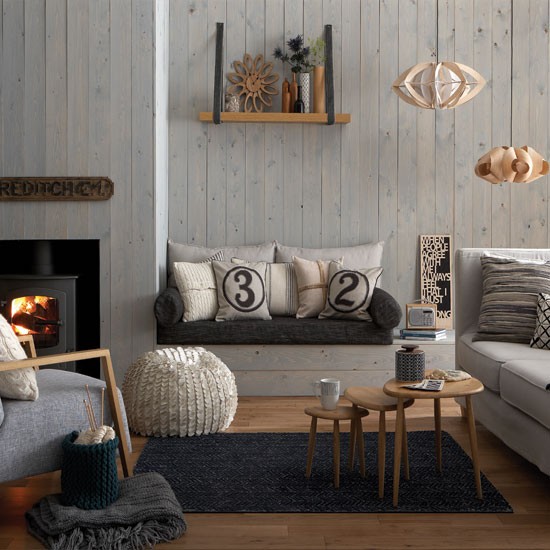 Floor to ceiling curtains, striped rug and rich colors are perfect to make your living warm and cozy.
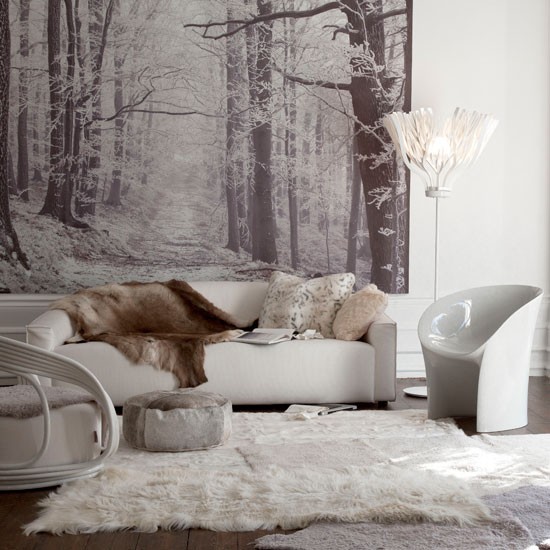
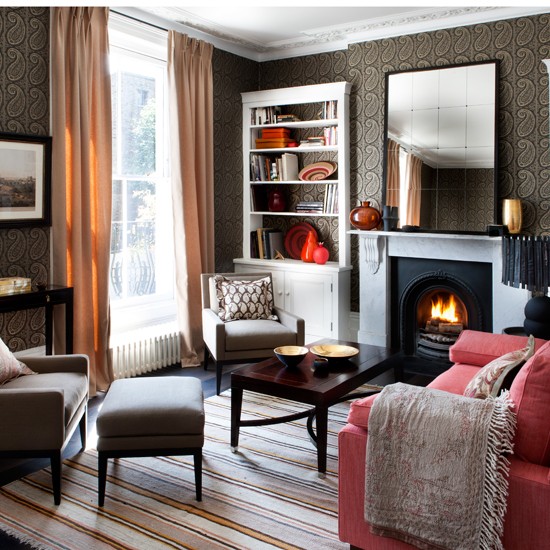 Use pillows and cushions to add extra warmth and comfort to your room. It is doubtless that softness of pillows and cushions compel one to snuggle them. Decorate your home with natural elements and add an element of serenity to your home.
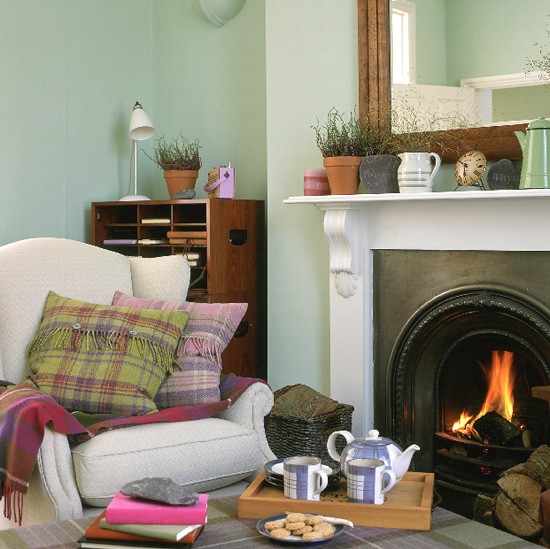 Beautiful fireplaces brings warmth to the place. If you do not have a fireplace, light candles in various parts of your house.
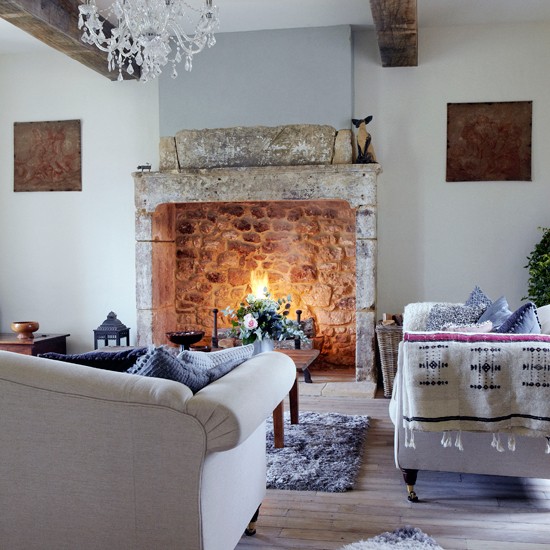
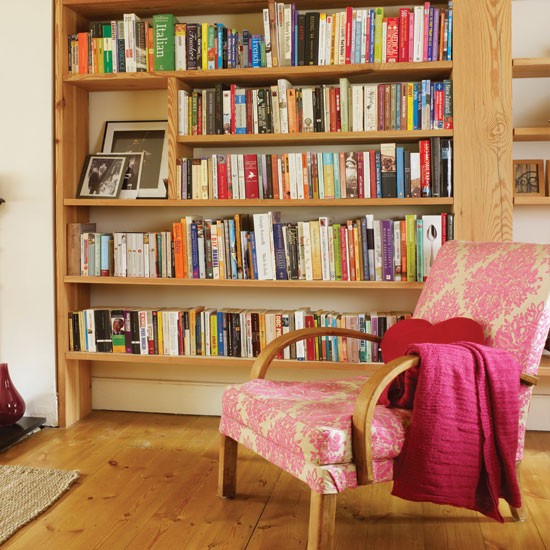
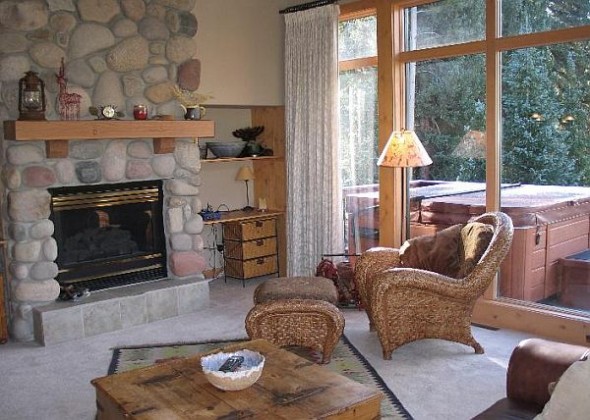 Add accessories such as rugs, cozy arm chair or a book case . You may also use silk throws in order to impart a rich feel to the interiors. Flannel is also a great option and goes well for throws as well as for curtains and bedding.
Layering a Living Room for Winter, and Undoing It in Spring
Treat the season as an exchange. Keep one lidded box or under-sofa bin for off-season textiles, and put the linen, cotton and light throws away before the wool comes out. A room that only ever gains layers ends up buried by February, and the January slump of putting things away is much shorter when the summer set already has a home. One in, one out is the whole system.
Weight is what changes the feel. Wool, boucle, velvet, flannel, chunky knit and sheepskin all trap air and read as warm the moment you see them, where cotton and linen read cool no matter the color. Swap in a heavier throw over the arm of the sofa, change two or three cushion covers, and if the floor is hard, layer a smaller wool or shag rug over the existing one within the seating group. Curtains do double duty: floor-length panels with a proper lining cut drafts at the glass and visually soften the coldest surface in the room. Hem them to just brush the floor or break by half an inch.
Reach for texture rather than pattern. Three or four different surfaces in one restrained palette — a nubbly cushion, a smooth leather, a woven basket, a matte ceramic — deliver depth without visual noise, and they let you keep the room calm while making it feel inhabited. Pattern piled on pattern produces a room that looks busy but not warm.
Light does more than any textile. Change bulbs in lamps to a warm temperature around 2200 to 2700 kelvin; anything above 3000K reads clinical after dark. Then bring the light down: three or four sources at seated eye level — table lamps, a floor lamp beside a chair, a small lamp on a shelf — feel far warmer than one bright ceiling fixture. Put lamps on dimmers or use bulbs that dim, and group real or LED candles in odd numbers on a tray so the flicker looks arranged rather than scattered.
Keep the warmth from becoming clutter by giving every soft thing a container. A large basket beside the sofa for throws, a tray for candles and matches, a lidded box for remotes and chargers. Limit yourself to two or three cushion fabrics and an odd number of cushions per sofa, and clear each surface completely before you decide what goes back on it. Warm rooms are layered; cluttered rooms are simply undecided.
Frequently Asked Questions
How do you make a living room feel warmer in winter without turning up the heat?
Line the curtains and let them reach the floor, layer a wool rug over hard flooring, and swap in heavier weaves such as wool or velvet. Then warm the light: low lamps with 2700K bulbs change the perceived temperature of a room more than any single object.
What color light bulb is best for a cozy living room?
Warm white in the 2200K to 2700K range, which is the yellow-amber end of the scale. Bulbs at 3000K and above look bright and office-like after dark. Keep every bulb in the room at the same temperature so the light does not look patchy.
How many throw pillows should a sofa have?
Odd numbers look more relaxed than even ones on a long sofa, so three or five, with two on a loveseat. Limit yourself to two or three fabrics and vary the size, and leave enough seat clear that people can actually sit down.
Can you layer one rug over another?
Yes, and it is one of the quickest winter changes. Put a larger flat-weave or sisal rug down as the base and center a smaller wool, shag or sheepskin over it inside the seating group, keeping the top rug clearly smaller so the border reads as deliberate.
Do heavier curtains actually help in cold weather?
Lined or interlined panels reduce the draft and heat loss at the glass, which is usually the coldest surface in a living room. Closing them at dusk helps most. Mount the rod close to the ceiling and let the fabric overlap the frame at the sides to seal the gap.
Related Posts

Comments (0)
No comments yet. Be the first to comment!