
The Ultimate Guide to Coffee Shop Lighting Ideas That'll Make Your Café Instagram-Worthy and Profitable

Okay, let's be real – if your coffee shop doesn't have that perfect lighting that makes everyone's latte art pop on their Instagram stories, you're literally missing out on free marketing gold. We're living in an era where people choose cafés based on how their flat white will look in their feed, and honey, lighting is EVERYTHING. Whether you're planning to open your dream café or giving your current spot a major glow-up, this guide is about to become your lighting bible. We're talking about creating that cozy-yet-energetic vibe that keeps customers coming back for more than just the caffeine fix – they'll be coming for the aesthetic, the ambiance, and yes, those perfect selfie opportunities.
Why Coffee Shop Lighting Design Matters More Than You Think
Coffee shop lighting isn't just about being able to see your menu clearly (though that's important too). It's the secret ingredient that transforms a simple café into a memorable experience. Studies show that proper lighting can increase customer dwell time by up to 30%, which directly translates to higher sales and better customer satisfaction.
The right lighting design creates emotional connections with your customers. Warm, inviting lights make people feel comfortable and relaxed, encouraging them to stay longer, order that second drink, or bring friends next time. On the flip side, harsh fluorescent lights can make even the best coffee taste mediocre and drive customers away faster than you can say "espresso."
The Psychology Behind Café Lighting
Understanding lighting psychology is crucial for coffee shop owners. Different types of lighting affect mood, energy levels, and even appetite. Warm lighting (2700K-3000K) creates intimacy and comfort, perfect for evening conversations or quiet study sessions. Cool lighting (4000K-5000K) promotes alertness and energy, ideal for morning rushes and productive work sessions.
Research from the Lighting Research Center shows that customers in well-lit, warm environments spend 15-20% more time in establishments and are 25% more likely to make additional purchases. This isn't just about aesthetics – it's about creating an environment that naturally encourages customer behavior that benefits your business.
Essential Coffee Shop Lighting Types Every Café Owner Should Know
Ambient Lighting: Setting the Overall Mood
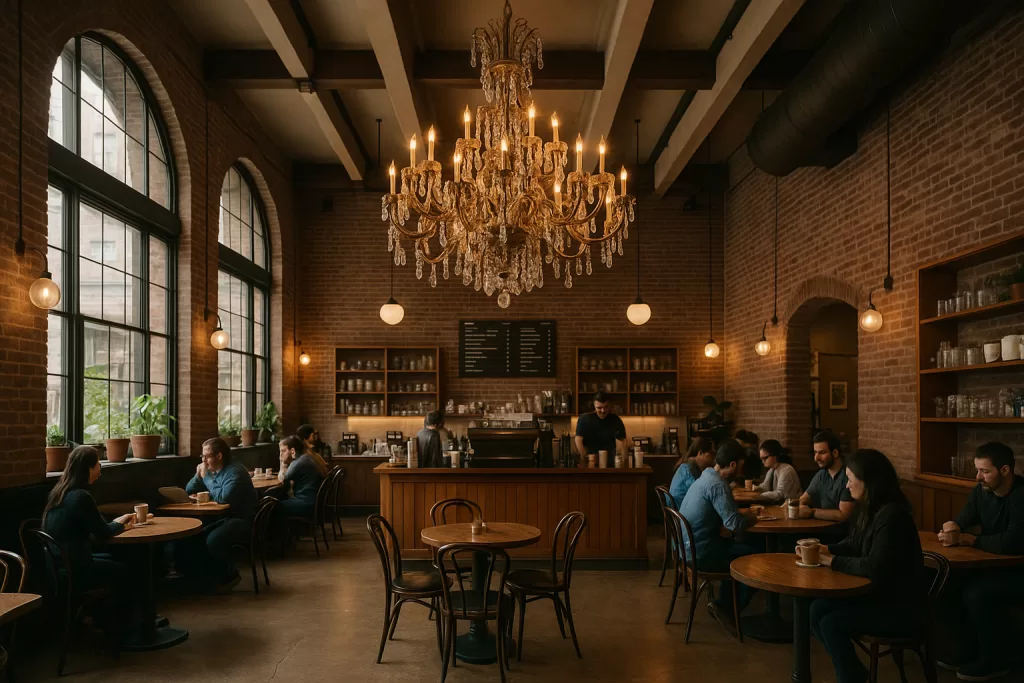
Ambient lighting forms the foundation of your café's atmosphere. This is your primary light source that provides general illumination throughout the space. For coffee shops, ambient lighting should be warm and inviting while still providing adequate visibility for safety and comfort.
Recessed ceiling lights are popular choices for ambient lighting in modern cafés. They provide even distribution without taking up visual space, making your café feel larger and more open. LED recessed lights are energy-efficient and offer dimming capabilities, allowing you to adjust the mood throughout the day.
Track lighting systems offer flexibility for coffee shops with changing layouts or seasonal décor. You can direct light where needed and easily add or remove fixtures as your space evolves. This adaptability makes track lighting particularly valuable for café owners who host events or regularly rearrange their seating areas.
Chandelier and statement ceiling fixtures work beautifully in coffee shops with higher ceilings or those aiming for a more upscale atmosphere. A well-chosen chandelier can become a focal point that customers remember and photograph, contributing to your café's unique identity.
Task Lighting: Functionality Meets Style
Task lighting serves specific functional purposes while adding to your café's overall design aesthetic. This type of lighting is essential for areas where detailed work happens – behind the counter, at reading nooks, and in food preparation areas.
Under-cabinet LED strips are essential for barista workstations. They provide clear visibility for coffee preparation while creating a modern, professional appearance. These lights also highlight your equipment and create visual interest behind the counter, making the coffee-making process part of the show.
Reading lamps and table lights cater to customers who use your café as a workspace or study area. Adjustable desk lamps at individual tables or cozy reading corners can differentiate your café from competitors and attract a loyal customer base of students, freelancers, and book lovers.
Display case lighting is crucial if you sell pastries, sandwiches, or retail items. Proper display lighting can increase food sales by up to 40% by making items look more appetizing and appealing. LED strip lights or small spotlights inside display cases create an attractive presentation while maintaining food safety temperatures.
Accent Lighting: Creating Visual Interest and Atmosphere
Accent lighting adds personality and visual drama to your coffee shop. This decorative lighting creates focal points, highlights architectural features, and contributes significantly to your café's Instagram-worthy factor.
Wall sconces add warmth and character to your walls while providing gentle illumination. They work particularly well in seating areas, creating intimate spaces within the larger café environment. Choose sconces that complement your overall design theme – industrial, rustic, modern, or eclectic.
String lights and fairy lights bring whimsy and charm to any coffee shop. They're particularly effective in outdoor seating areas, around windows, or draped across walls and ceilings. These lights create a magical atmosphere that customers love to photograph and share on social media.
Neon signs and LED art can serve as both lighting and branding elements. Custom neon signs with your café's name, motto, or coffee-related sayings become natural photo backdrops for customers while reinforcing your brand identity.
25+ Creative Coffee Shop Lighting Ideas That Actually Work
1. Industrial Pendant Light Clusters
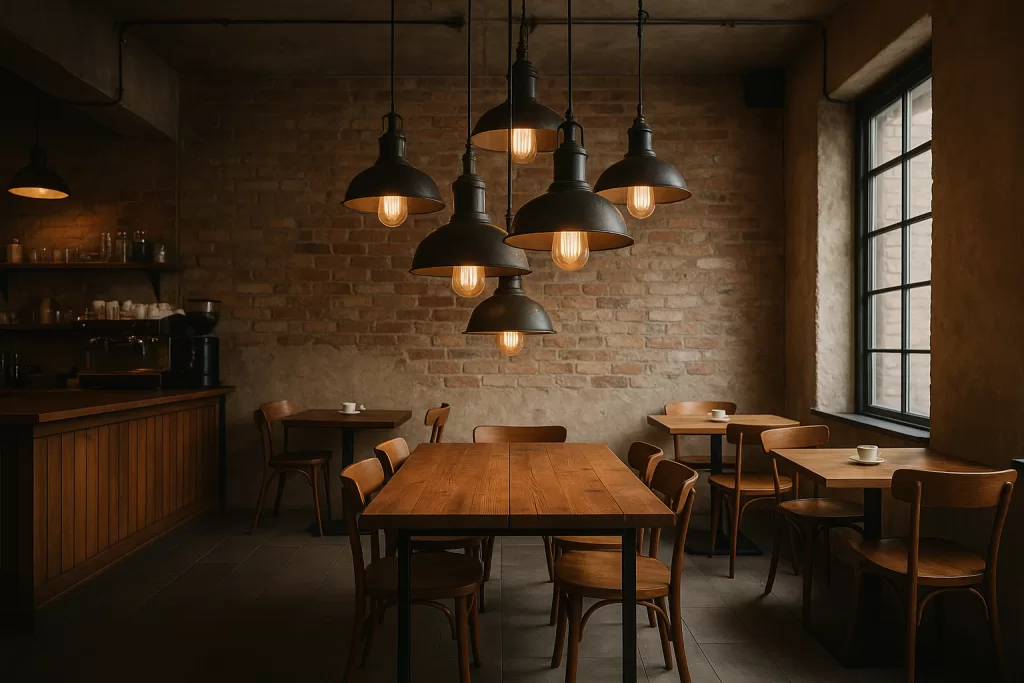
Group multiple industrial-style pendant lights at varying heights above your main seating area. This creates visual interest while providing adequate task lighting for customers. Use Edison bulb pendants for warmth or black metal fixtures for a modern edge. The varying heights add dimension and prevent the lighting from feeling too uniform or boring.
Cost estimate: $150-400 per pendant light, installation: $50-100 per fixture
2. Exposed Brick Wall Uplighting
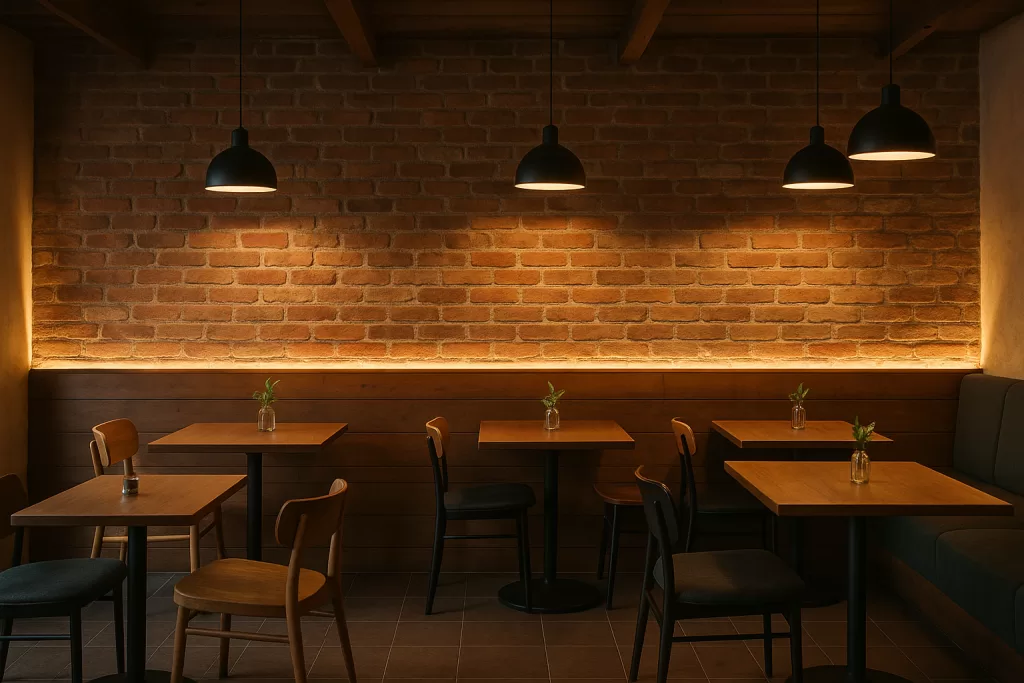
If your café features exposed brick walls, install LED strip lights or wall washers to highlight the texture and create dramatic shadows. This technique adds warmth and character while making your space feel larger and more dynamic. The interplay of light and shadow on brick creates an ever-changing visual experience throughout the day.
Cost estimate: $200-500 for LED strips and controls
3. Coffee Bean Chandelier
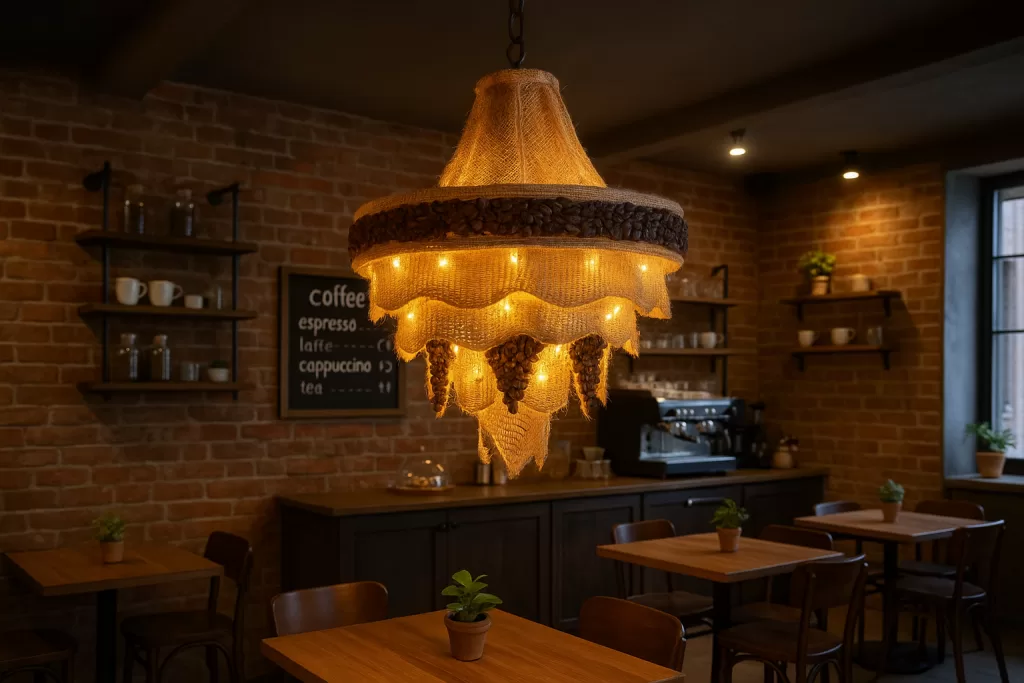
Create a unique focal point by designing a chandelier using coffee beans, burlap, and warm LED lights. This DIY lighting solution connects directly to your product while creating conversation-starting visual interest. The warm light filtering through coffee beans creates beautiful patterns and reinforces your café's identity.
Cost estimate: $100-300 for materials, DIY installation
4. Vintage Edison Bulb Displays
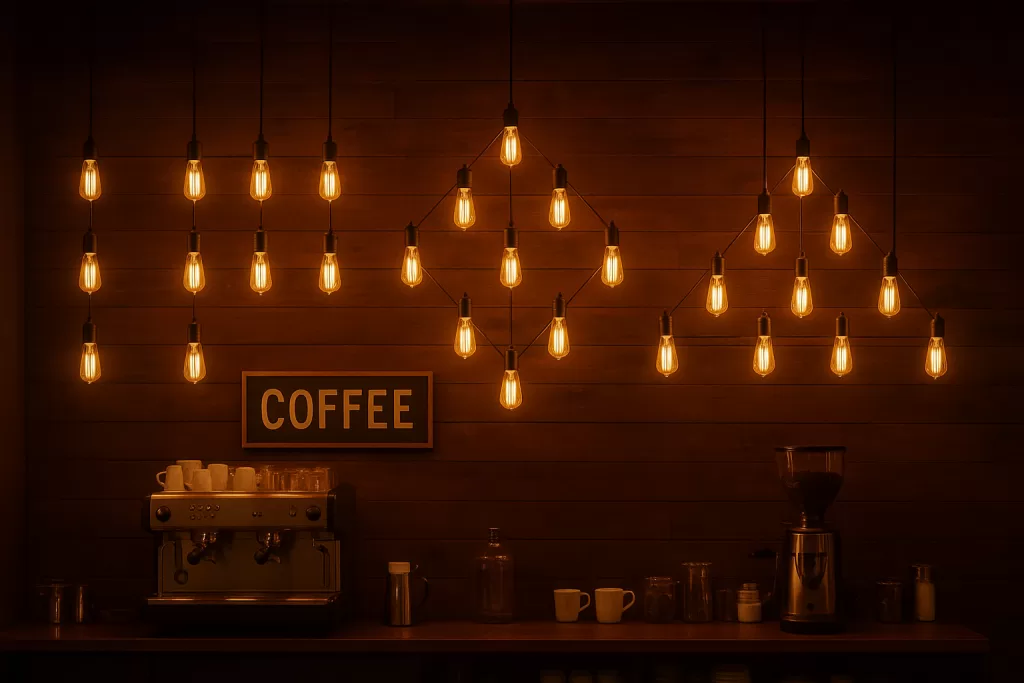
Arrange vintage Edison bulbs in geometric patterns or casual clusters. These bulbs provide warm, amber light that creates a nostalgic atmosphere perfect for coffee culture. Consider dimmer switches to adjust intensity throughout the day, from bright morning energy to cozy evening ambiance.
Cost estimate: $25-50 per Edison bulb, $100-200 for dimmer controls
5. LED Strip Under-Counter Lighting
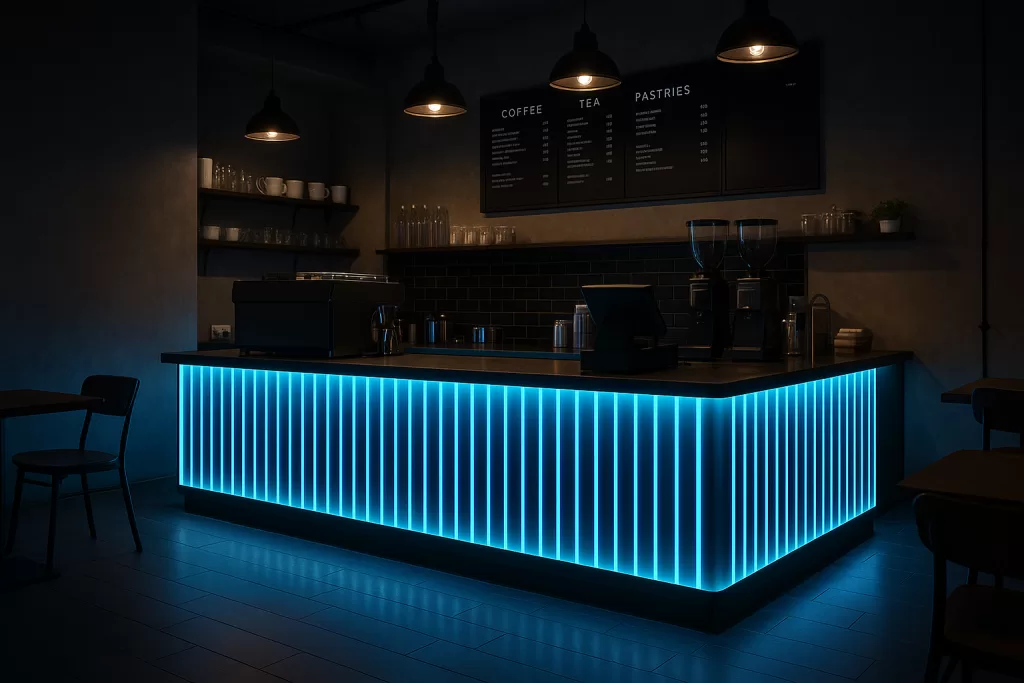
Install RGB LED strips under your service counter to create a modern, high-tech appearance. These lights can change colors for special events, holidays, or different times of day. The under-counter glow creates a floating effect that makes your counter appear more sophisticated and contemporary.
Cost estimate: $150-300 for RGB LED strips and controller
6. Mason Jar Light Fixtures
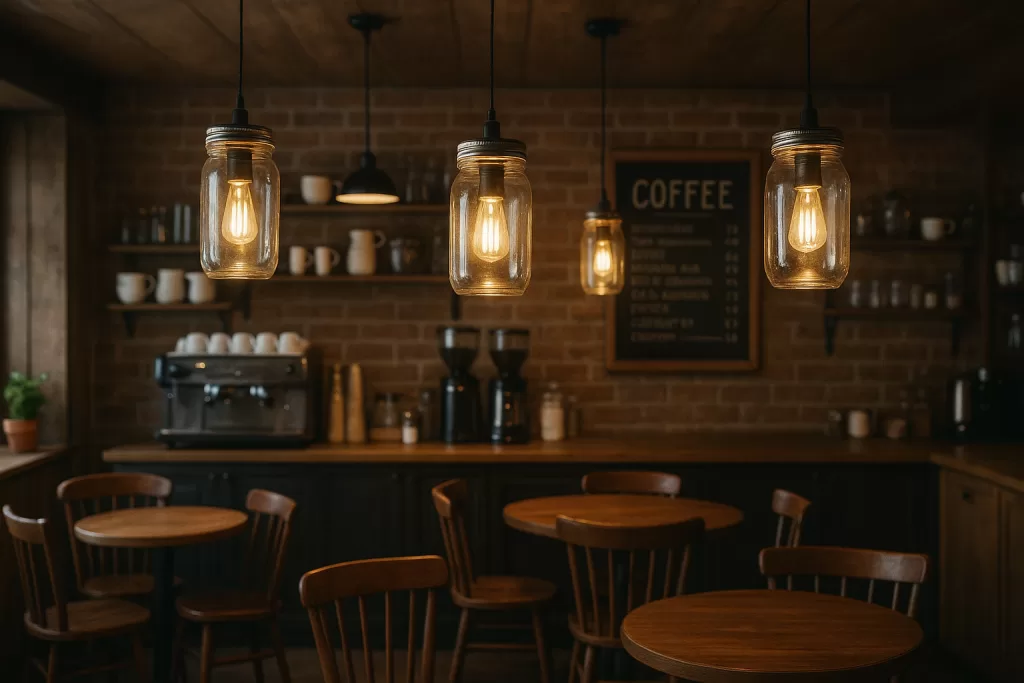
Convert mason jars into pendant lights or table lamps for a rustic, homey feel. This DIY approach allows for customization while keeping costs low. Fill jars with fairy lights for a magical effect, or use them as lamp shades for traditional bulbs. This lighting style works particularly well in cafés with farmhouse or shabby chic décor.
Cost estimate: $20-50 per jar fixture, DIY installation
7. Geometric LED Panel Art
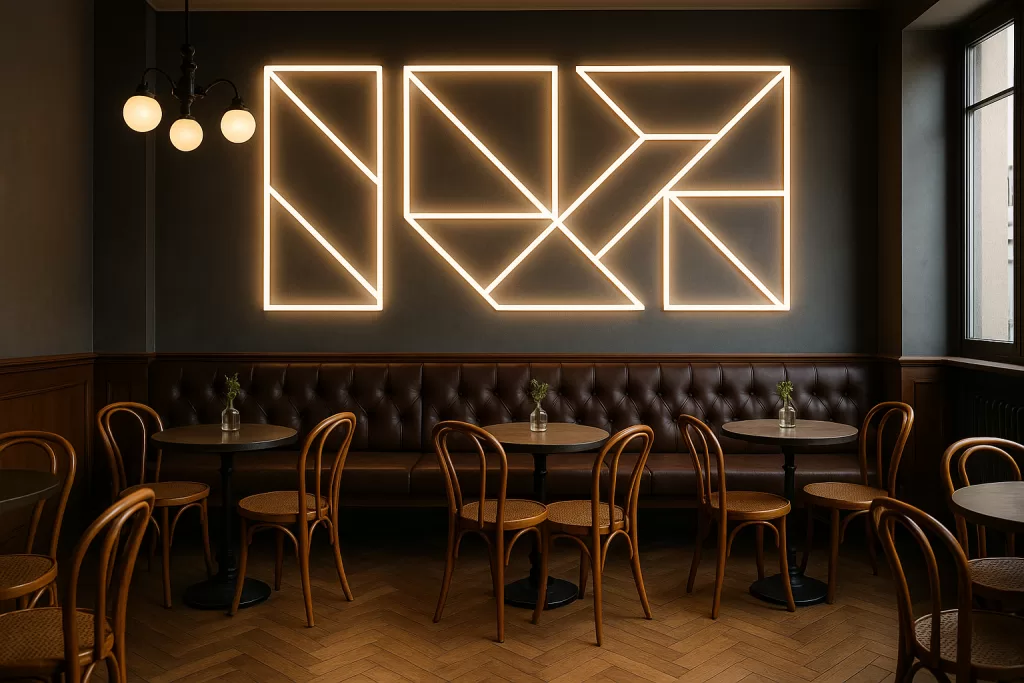
Install modern geometric LED panels that serve as both lighting and wall art. These panels can be programmed to change patterns and colors, creating a dynamic visual experience that keeps your space feeling fresh and contemporary. They work particularly well in minimalist or modern café designs.
Cost estimate: $200-800 per panel system
8. Candlelit Table Atmosphere
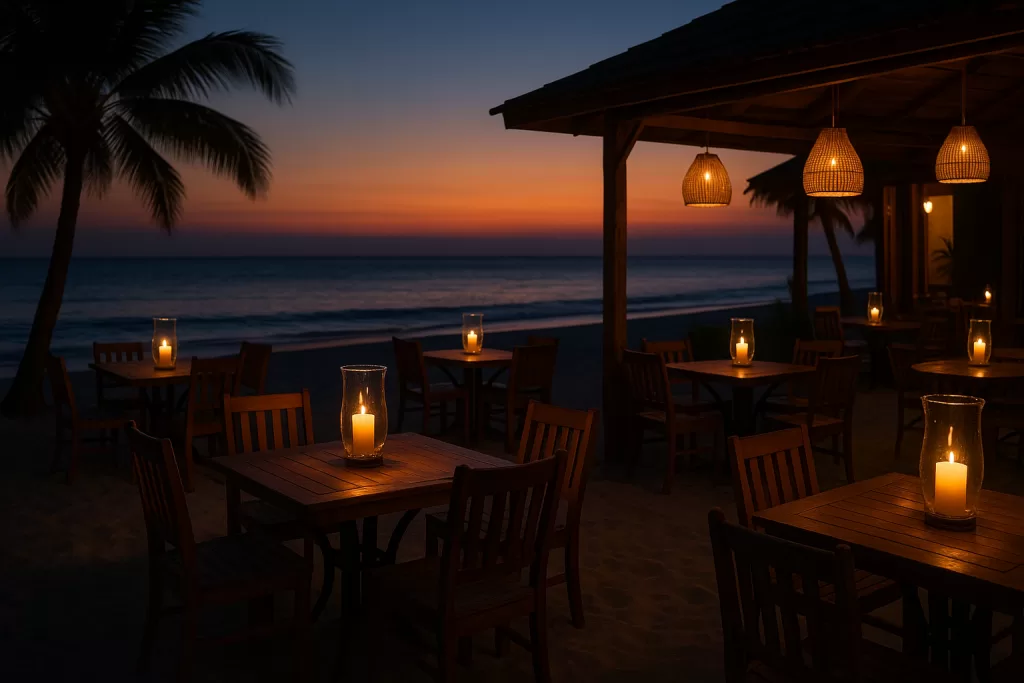
Supplement electric lighting with battery-operated LED candles or real candles in hurricane glasses for evening hours. This creates intimate, romantic lighting that encourages customers to stay longer and order additional items. The flickering light effect adds warmth and comfort that electric lighting alone cannot achieve.
Cost estimate: $10-30 per table for candle setup
9. Fiber Optic Star Ceiling
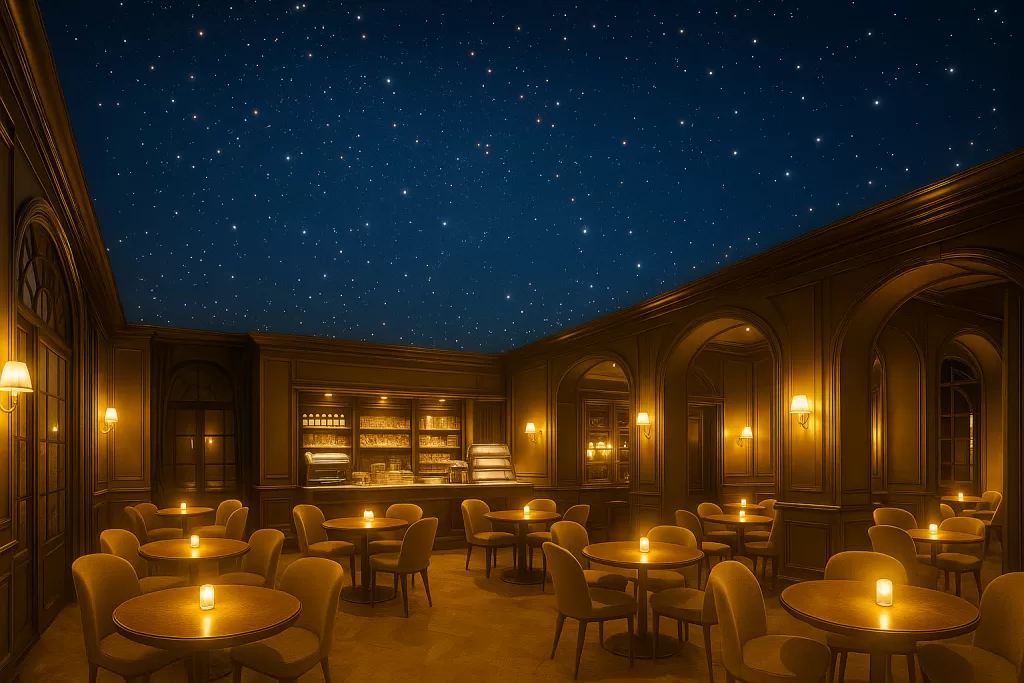
Install fiber optic lighting in your ceiling to create a starry night effect. This dramatic lighting solution works particularly well in cafés with dark ceilings or those aiming for a magical, ethereal atmosphere. The tiny points of light create wonder and provide gentle ambient lighting.
Cost estimate: $500-1500 for fiber optic system
10. Hanging Garden Lights
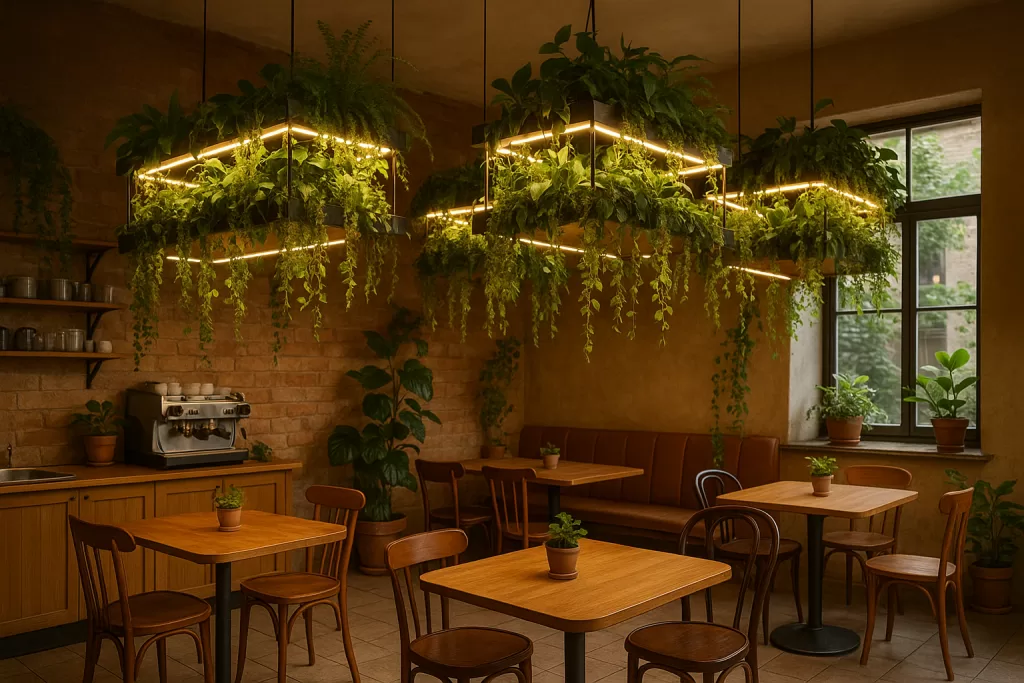
Combine living plants with integrated LED lighting to create hanging garden fixtures. This biophilic design approach improves air quality while providing beautiful, natural lighting. The combination of greenery and warm light creates a calming, health-conscious atmosphere that appeals to wellness-minded customers.
Cost estimate: $100-300 per hanging garden light
11. Copper Pipe Light Fixtures
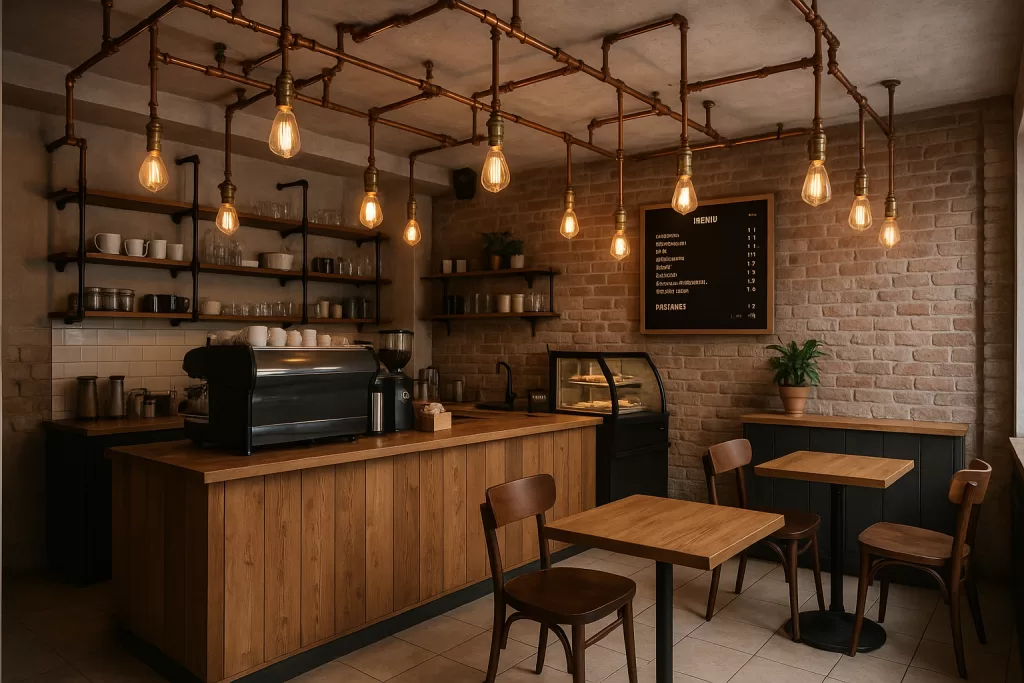
Design custom light fixtures using copper pipes and industrial fittings. This steampunk-inspired approach creates unique, conversation-starting lighting that can be tailored to your space's specific dimensions and style. Copper develops a beautiful patina over time, adding character and authenticity to your café.
Cost estimate: $150-400 for materials and custom design
12. Moroccan Lantern Clusters
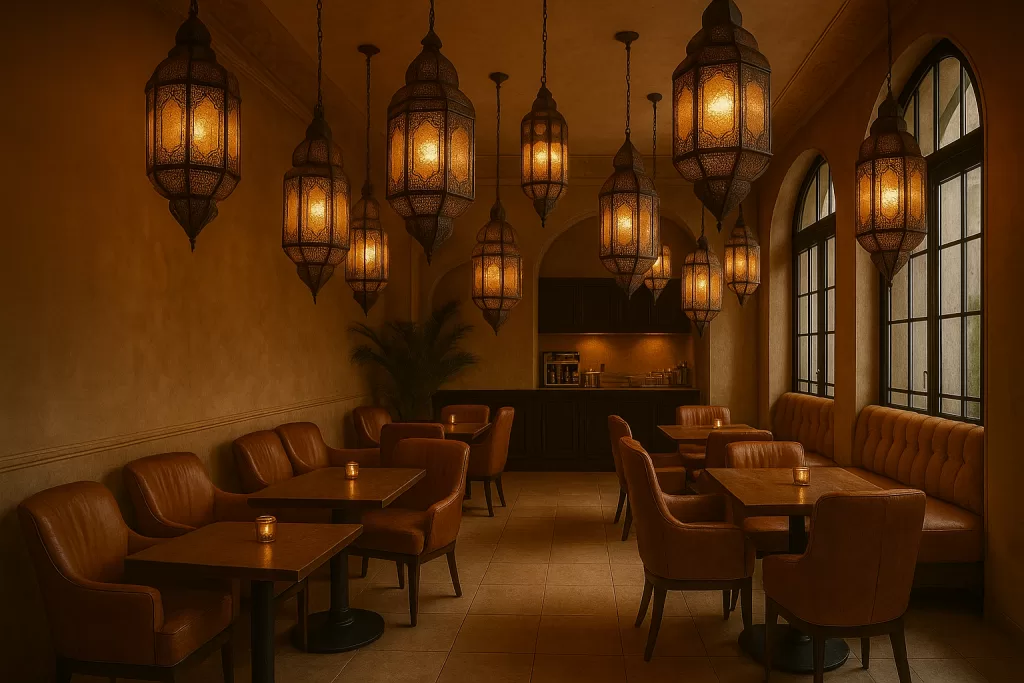
Hang groups of Moroccan-style lanterns at different heights to create exotic, warm lighting. These fixtures cast beautiful shadow patterns and add cultural richness to your café's atmosphere. Mix different sizes and finishes for visual interest and depth.
Cost estimate: $50-200 per lantern
13. Reclaimed Wood and Edison Bulb Combinations
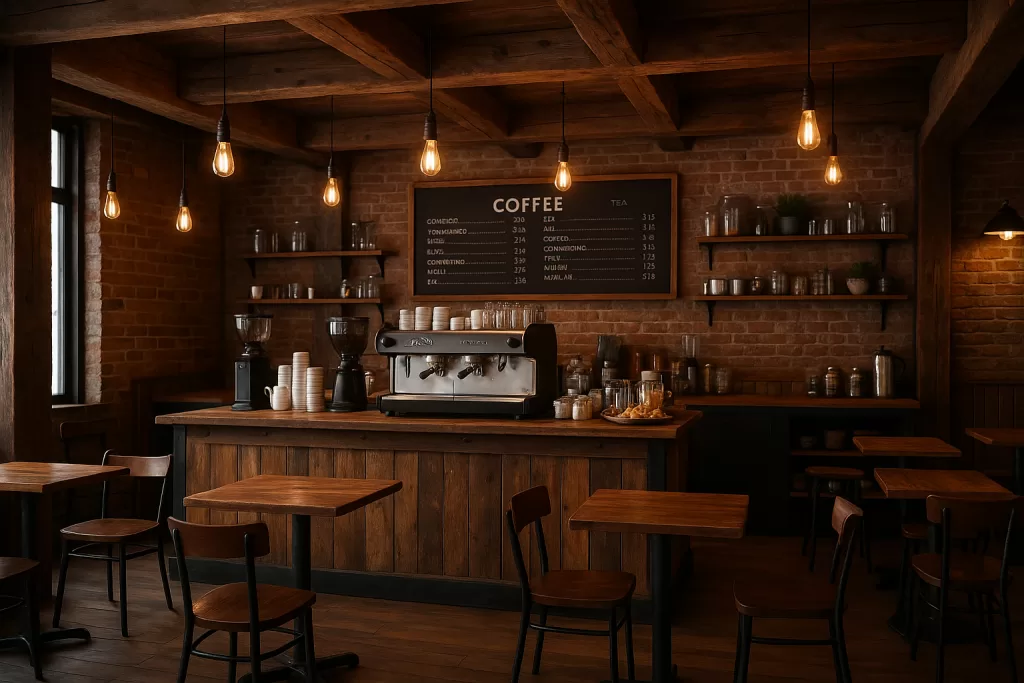
Combine reclaimed wood beams with exposed Edison bulbs for rustic industrial charm. This lighting style connects to sustainability values while creating warm, inviting illumination. The natural wood textures and warm bulb glow create a cozy, authentic atmosphere.
Cost estimate: $200-600 for reclaimed wood and bulbs
14. Smart Color-Changing Lights
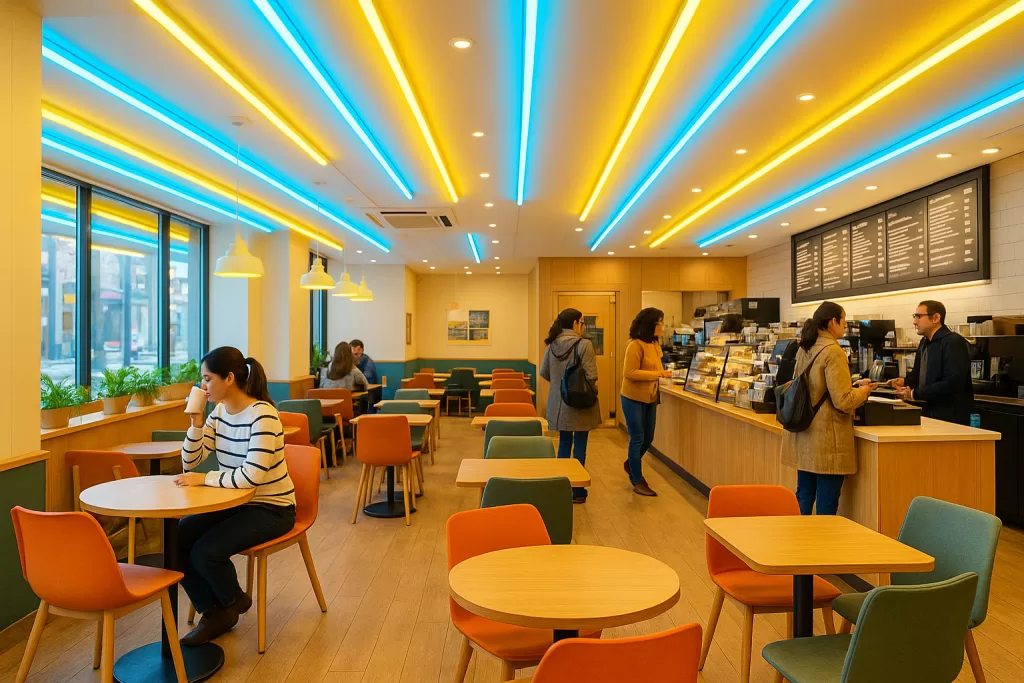
Install smart LED bulbs that can be controlled via smartphone apps. Change colors and intensity throughout the day to match your café's energy – bright and energetic for morning rush, warm and cozy for afternoon relaxation, and intimate for evening socializing.
Cost estimate: $30-80 per smart bulb
15. Vintage Window Frame Light Boxes
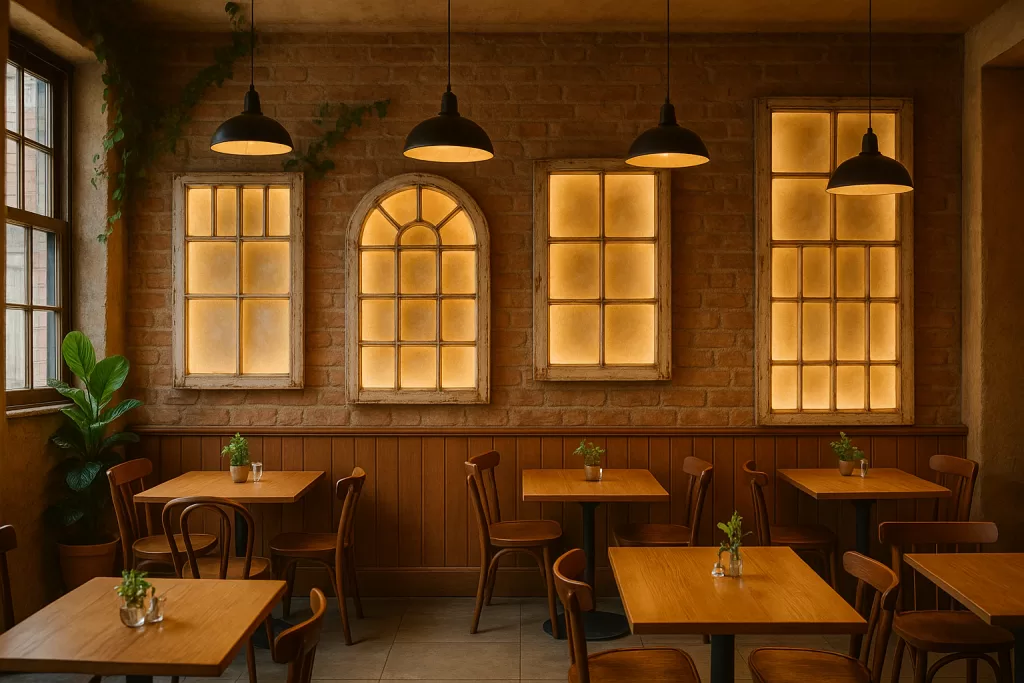
Repurpose old window frames as backlit decorative elements. Install LED panels behind frosted or colored glass for unique wall art that also provides ambient lighting. This upcycling approach adds character while supporting sustainability values.
Cost estimate: $100-300 per window frame light box
16. Linear LED Track Systems
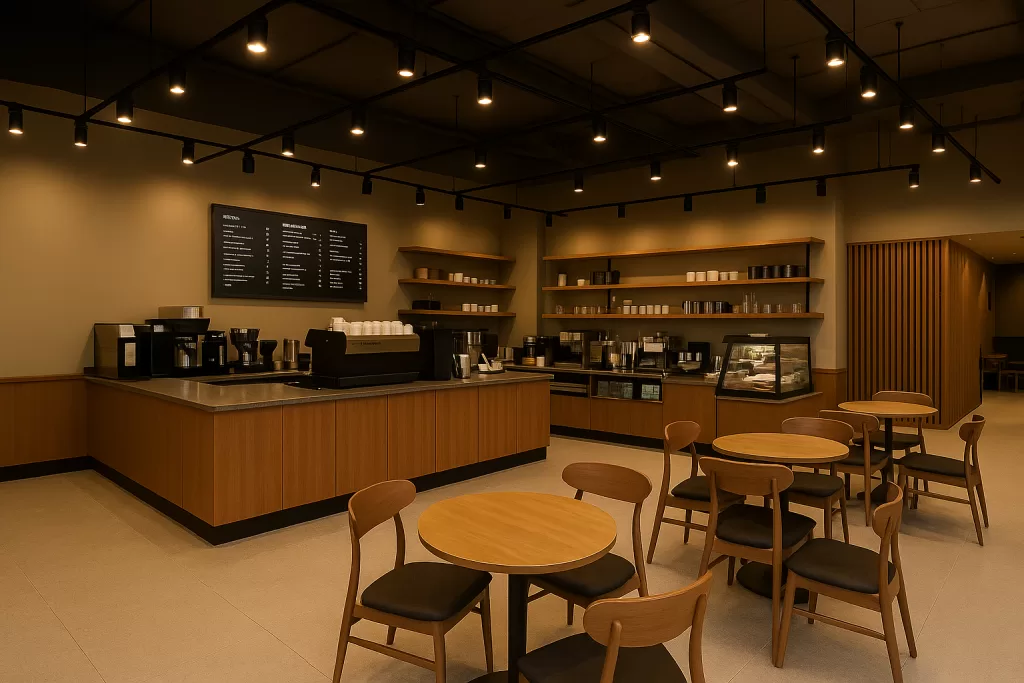
Install sleek linear LED track systems that can be reconfigured as needed. These modern fixtures provide excellent task lighting while maintaining clean, contemporary aesthetics. They're particularly effective in minimalist café designs or spaces with concrete and steel elements.
Cost estimate: $200-500 per track system
17. Origami-Inspired Paper Lampshades
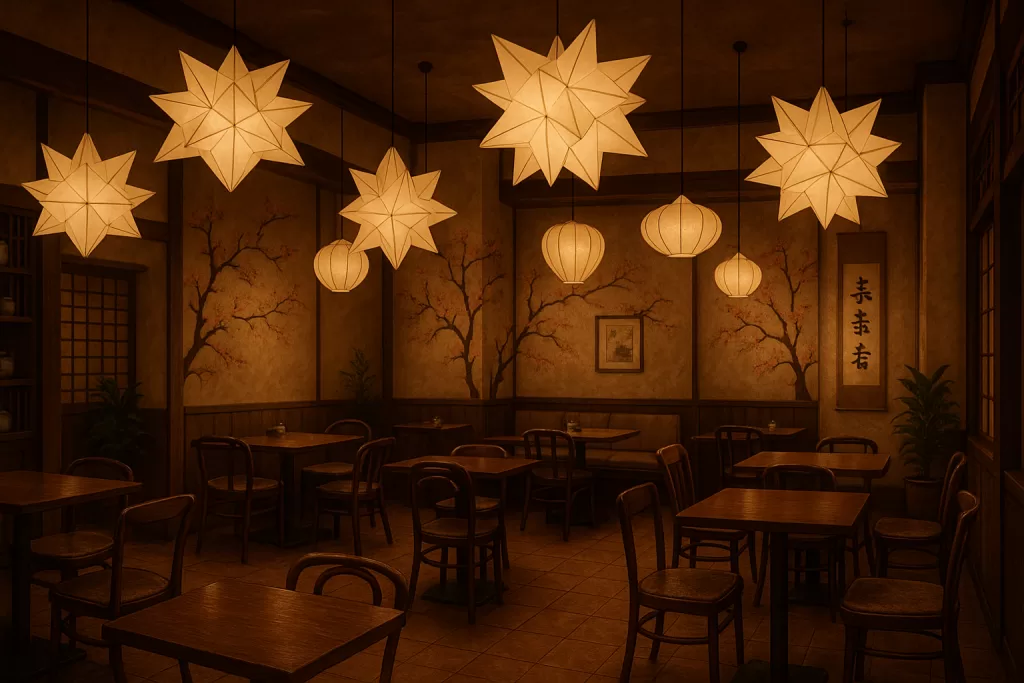
Create or purchase origami-style paper lampshades for a unique, artistic lighting approach. These fixtures cast interesting shadow patterns while providing soft, diffused light. They're particularly effective in cafés with Asian-inspired décor or those emphasizing handcrafted elements.
Cost estimate: $30-100 per origami lampshade
18. Floating Shelf Lighting
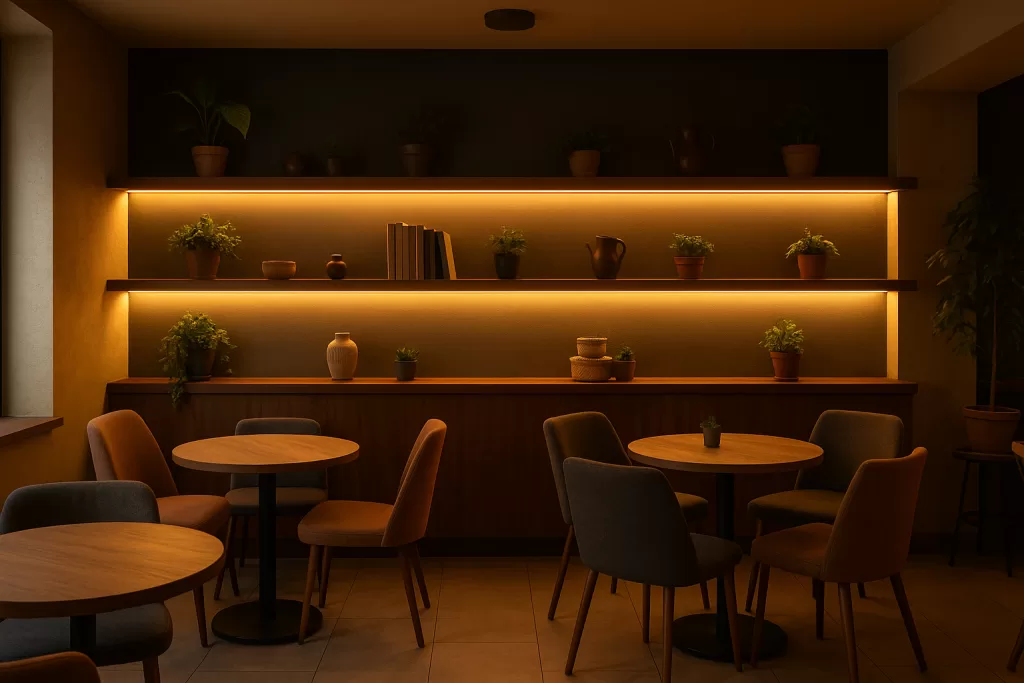
Install LED strips under floating shelves to create the illusion that shelves are glowing. This modern technique highlights merchandise, books, or decorative items while providing ambient lighting. The floating effect adds visual interest and modernity to your space.
Cost estimate: $50-150 per shelf lighting installation
19. Vintage Marquee Letters
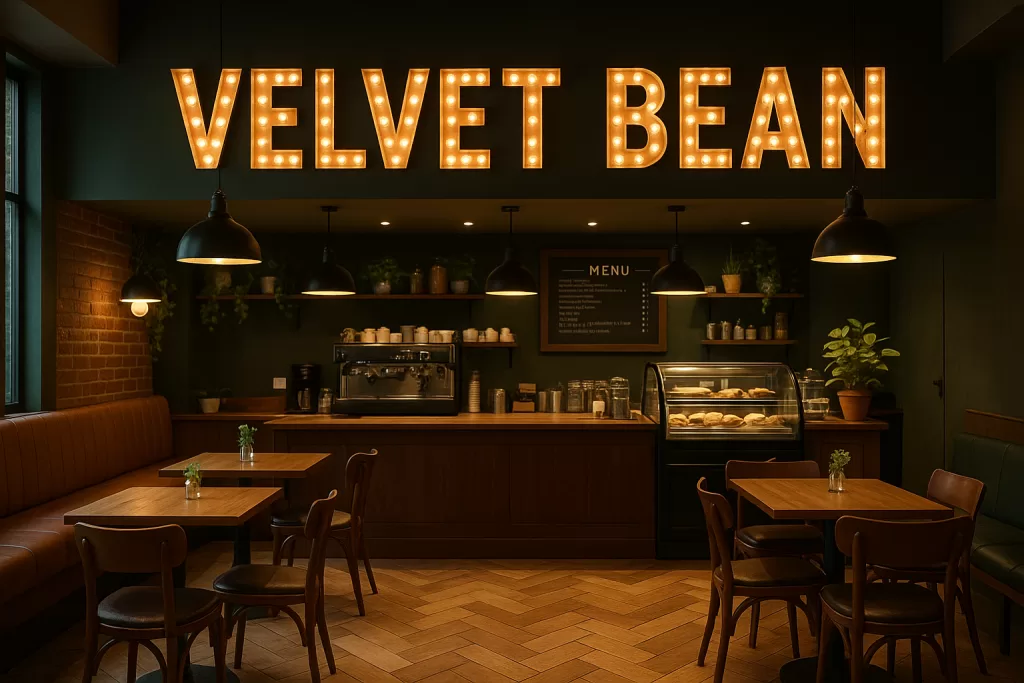
Use illuminated marquee letters to spell out your café name, coffee-related words, or inspirational messages. These theatrical lighting elements create excellent photo opportunities for customers while reinforcing your brand identity. LED versions are energy-efficient and long-lasting.
Cost estimate: $100-300 per marquee letter
20. Bamboo and Rattan Light Fixtures
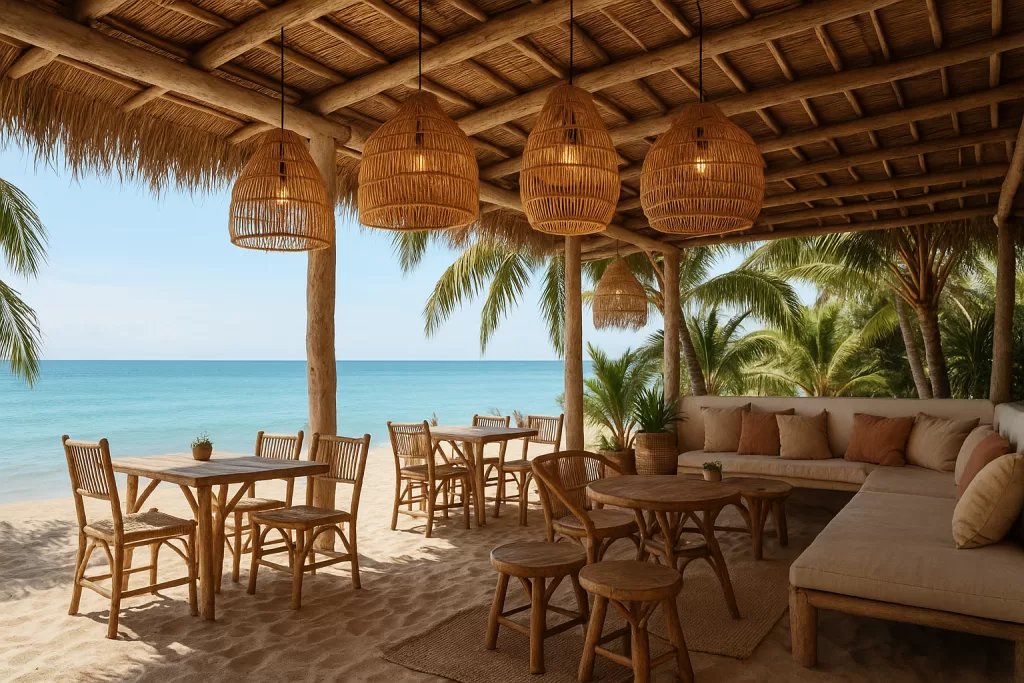
Incorporate sustainable bamboo or rattan light fixtures for natural, eco-friendly lighting. These materials provide warm, filtered light while appealing to environmentally conscious customers. The natural textures add organic beauty and connect your indoor space to nature.
Cost estimate: $80-250 per bamboo/rattan fixture
21. Pendant Light Groupings Over Coffee Bar
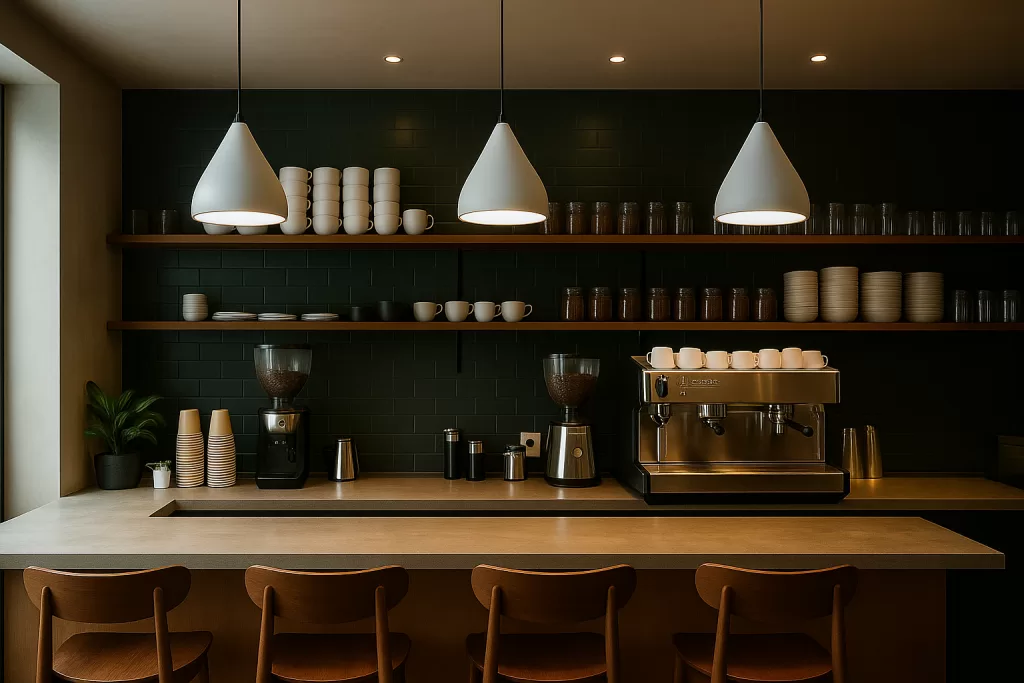
Create dramatic focal points by grouping pendant lights over your coffee preparation area. This lighting serves both functional and aesthetic purposes, providing adequate illumination for baristas while creating visual interest for customers. Vary heights and styles for dynamic appeal.
Cost estimate: $200-600 for grouped pendant installation
22. Backlit Coffee Bean Wall Art
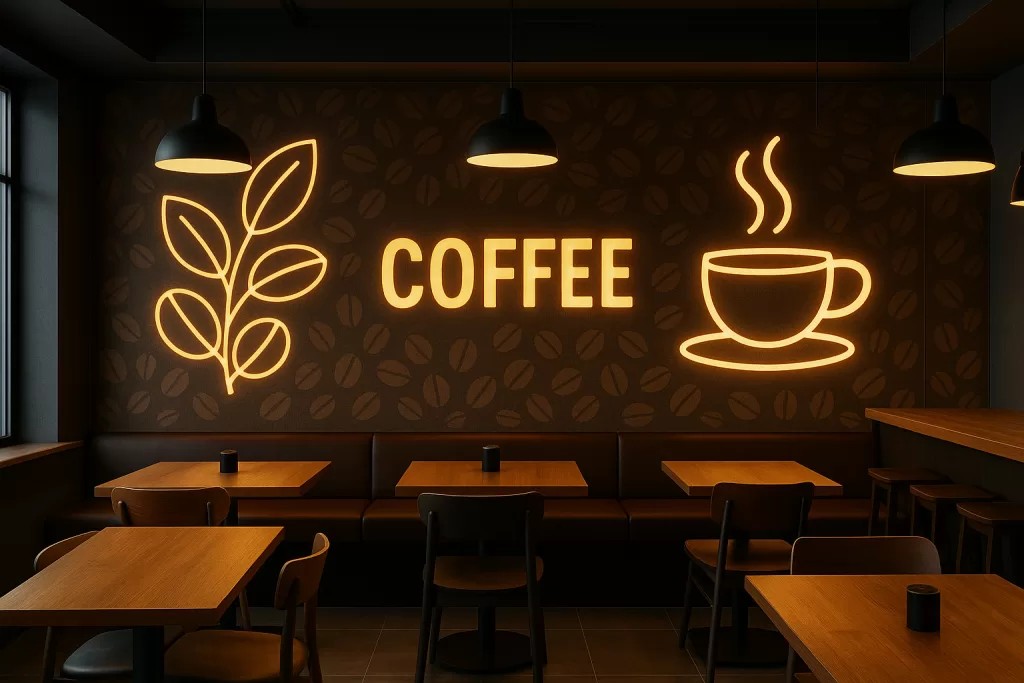
Create custom wall art by backlighting coffee bean designs or coffee-related graphics. This lighting technique highlights your café's theme while providing gentle ambient lighting. Use LED panels behind translucent materials for even, beautiful illumination.
Cost estimate: $300-800 for custom backlit art
23. Rope Light Borders and Outlines
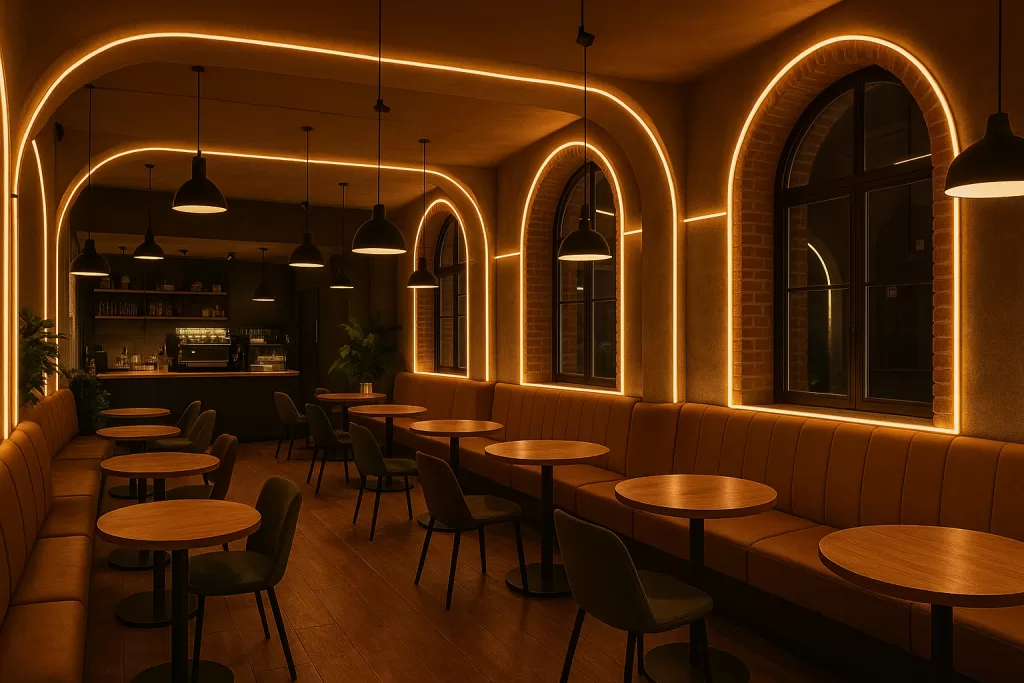
Use LED rope lights to outline architectural features, windows, or seating areas. This technique adds definition to your space while providing subtle ambient lighting. Rope lights are versatile, easy to install, and can be changed seasonally for different effects.
Cost estimate: $50-150 for rope light installation
24. Antique Chandelier Conversion
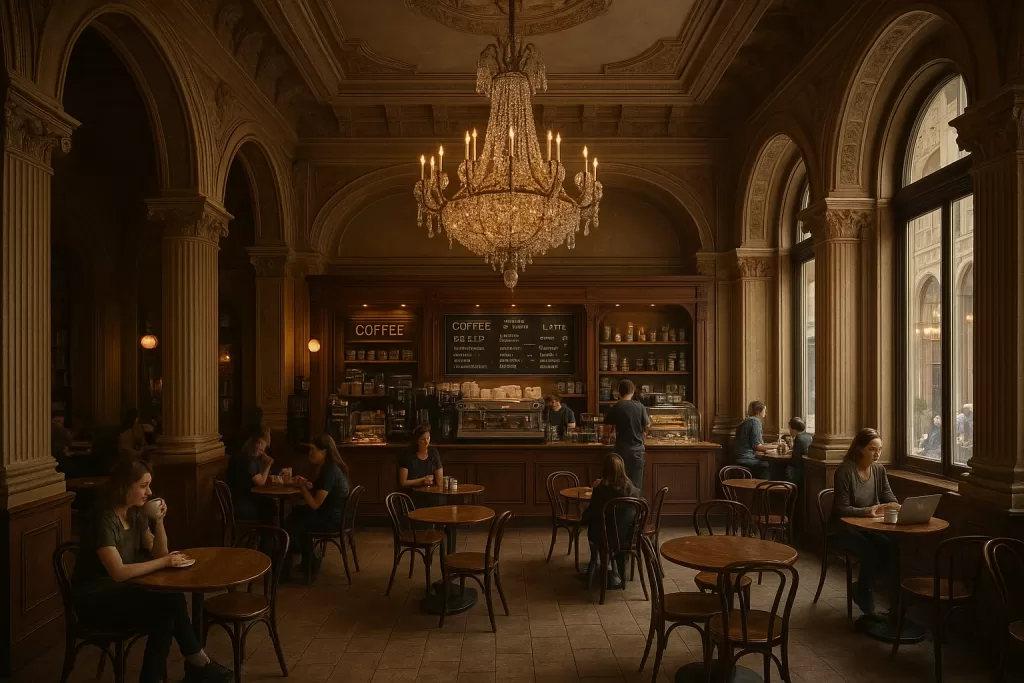
Convert antique chandeliers to LED lighting for vintage charm with modern efficiency. This approach provides elegant lighting while supporting sustainability through upcycling. Antique fixtures add character and become conversation pieces for customers.
Cost estimate: $200-800 for antique chandelier and LED conversion
25. Infinity Mirror Coffee Tables
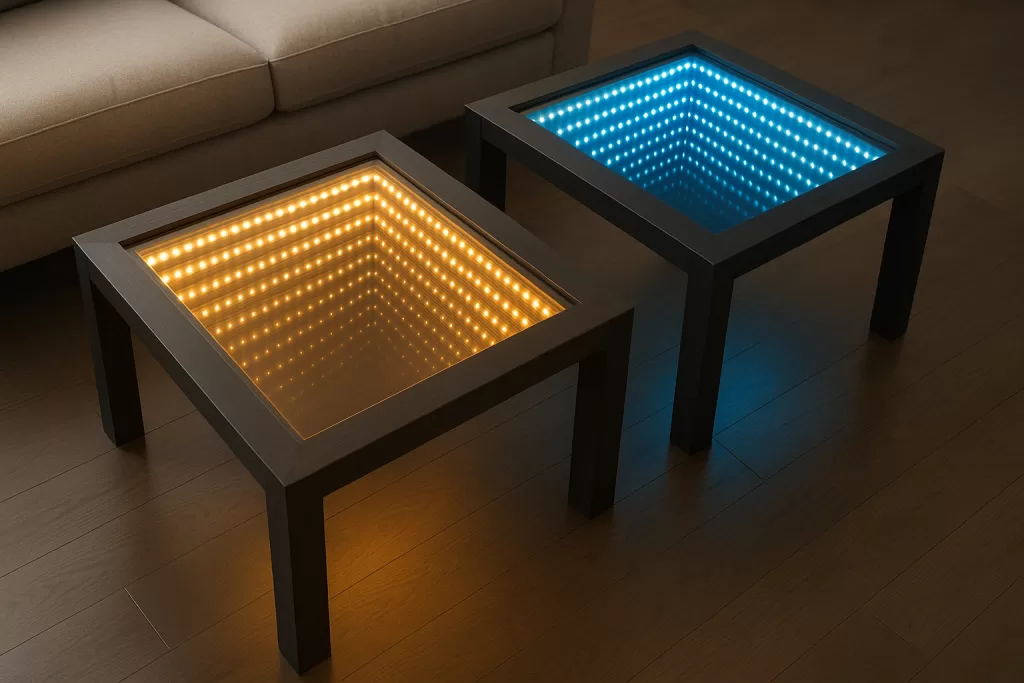
Create coffee tables with built-in infinity mirror lighting effects. These futuristic pieces serve as both furniture and lighting, creating mesmerizing visual effects that customers love to photograph. They work particularly well in modern, tech-forward café environments.
Cost estimate: $400-1000 per infinity mirror table
Seasonal Coffee Shop Lighting Ideas
Spring and Summer Lighting Adaptations
During warmer months, adjust your lighting to complement increased natural light and outdoor dining opportunities. Reduce interior ambient lighting during peak daylight hours and focus on accent lighting that creates visual interest without competing with sunlight.
Outdoor string light installations become crucial for evening patio service. Create magical outdoor dining experiences with warm string lights draped overhead or wrapped around trees and pergolas. Solar-powered options reduce energy costs while supporting sustainability goals.
Color-changing LED systems allow you to celebrate seasonal holidays and events. Program lights to display spring greens, summer blues, or patriotic colors for American holidays. This flexibility keeps your café feeling fresh and connected to the community calendar.
Fall and Winter Lighting Strategies
Colder months require warmer, more inviting lighting to combat shorter days and colder weather. Increase ambient lighting levels and emphasize warm color temperatures to create cozy refuge from winter weather.
Fireplace-effect lighting using LED flames or projection systems creates warmth and comfort without actual fire hazards. These systems provide the psychological comfort of a fireplace while maintaining safety in commercial spaces.
Holiday-themed lighting during November and December can significantly boost sales and customer sentiment. Tasteful holiday lights, whether traditional Christmas themes or more general winter wonderland effects, create positive associations with your café.
Coffee Shop Lighting Design Tips for Different Café Styles
Industrial Coffee Shop Lighting
Industrial café designs benefit from exposed fixtures, metal elements, and Edison bulbs. Emphasize functionality and raw materials in your lighting choices. Track lighting, pendant clusters, and exposed conduit all support industrial aesthetics while providing practical illumination.
Exposed ductwork lighting integrates fixtures with HVAC systems for authentic industrial appeal. Use metal halide or LED high-bay fixtures for powerful, efficient lighting that complements industrial architecture.
Concrete and steel accent lighting highlights architectural elements while maintaining industrial authenticity. LED strip lights behind steel beams or under concrete counters create dramatic effects without overwhelming the space.
Rustic Farmhouse Café Lighting
Rustic designs call for natural materials, warm colors, and handcrafted elements. Wood, rope, and burlap fixtures create authentic farmhouse atmospheres that appeal to customers seeking comfort and tradition.
Barn-style pendant lights provide practical task lighting while reinforcing rustic themes. These fixtures work particularly well over communal tables or food service areas.
Lantern and mason jar fixtures add homey charm while providing warm, diffused lighting. These DIY-friendly options allow for customization and cost-effective lighting solutions.
Modern Minimalist Café Lighting
Minimalist designs require clean lines, hidden sources, and sophisticated control systems. Emphasis should be on what lighting reveals rather than the fixtures themselves.
Recessed LED systems provide powerful, even lighting without visual clutter. Programmable systems allow for different lighting scenes throughout the day while maintaining clean aesthetics.
Linear LED strips create architectural emphasis while providing task and ambient lighting. Hidden installation maintains minimalist principles while delivering functional illumination.
Vintage Coffee House Lighting
Vintage themes benefit from authentic or reproduction period fixtures. Art Deco, Mid-Century Modern, or Victorian lighting elements should align with your chosen era while meeting modern efficiency and safety standards.
Restored antique fixtures provide authentic character while supporting sustainability through reuse. Professional restoration ensures safety and efficiency while maintaining historical authenticity.
Period-appropriate reproductions offer vintage aesthetics with modern functionality. These fixtures provide the visual appeal of antiques without the maintenance and reliability concerns of old electrical systems.
Energy-Efficient LED Coffee Shop Lighting Solutions
Understanding LED Benefits for Coffee Shops
LED lighting technology offers significant advantages for coffee shop operations. Energy consumption is typically 75% lower than traditional incandescent bulbs, and 50% lower than fluorescent alternatives. This translates to substantial monthly savings on electricity bills, particularly important for businesses operating 12+ hours daily.
Lifespan advantages mean LED bulbs last 25-50 times longer than incandescent bulbs, reducing replacement costs and maintenance labor. For coffee shops open long hours, this reliability prevents lighting failures during peak business periods.
Heat reduction from LED lighting improves customer comfort and reduces air conditioning costs. Traditional incandescent bulbs generate significant heat, forcing HVAC systems to work harder during warm months.
Smart Lighting Controls for Energy Management
Automated lighting controls can reduce energy consumption by 30-50% while improving customer experience. Daylight sensors automatically adjust interior lighting based on natural light levels, ensuring appropriate illumination without energy waste.
Occupancy sensors reduce lighting in unused areas during slow periods while automatically illuminating spaces when customers arrive. These systems are particularly valuable for larger cafés with multiple seating zones.
Programmable dimming systems allow you to create different lighting scenes for different times of day or events. Morning brightness for alertness, afternoon warmth for comfort, and evening intimacy for socializing – all while optimizing energy usage.
Solar-Powered Outdoor Lighting Options
Solar lighting for outdoor seating areas eliminates electrical installation costs while supporting sustainability messaging. Modern solar LED systems provide reliable illumination even during cloudy periods, making them practical for most US climates.
Solar string lights create magical outdoor dining atmospheres without electrical infrastructure. High-quality systems include battery backup for consistent lighting regardless of weather conditions.
Solar pathway and accent lighting enhances safety and aesthetics for outdoor areas while operating completely off-grid. These systems pay for themselves through eliminated electrical costs and installation savings.
Common Coffee Shop Lighting Mistakes to Avoid
Over-Lighting and Under-Lighting Issues
Many coffee shop owners make the mistake of installing too much or too little lighting, both of which negatively impact customer experience. Over-lit cafés feel harsh and institutional, discouraging customers from relaxing and socializing. Under-lit spaces feel dingy and uninviting, making customers uncomfortable and less likely to stay.
Uniform lighting throughout your space creates monotony and prevents you from creating different zones and experiences. Varying light levels create visual interest and allow customers to choose seating based on their current needs – bright areas for work, cozy corners for conversation.
Ignoring natural light patterns leads to poor lighting choices. Observe how sunlight moves through your space throughout the day and plan artificial lighting to complement rather than compete with natural illumination.
Poor Color Temperature Choices
Mixing incompatible color temperatures creates visual discord and customer discomfort. Cool fluorescent lighting combined with warm incandescent creates an unpleasant visual experience that subconsciously disturbs customers.
Task-inappropriate color temperatures reduce functionality and comfort. Cool lighting in evening relaxation areas feels harsh and unwelcoming, while warm lighting in work areas reduces productivity and visual comfort.
Seasonal inflexibility occurs when lighting systems cannot adapt to changing daylight conditions and customer needs throughout the year. Fixed lighting that works in summer may feel inadequate during shorter winter days.
Inadequate Lighting Control Systems
Installing beautiful lighting without proper controls limits your ability to create appropriate atmospheres throughout the day. Manual switches for every fixture become impractical and lead to inconsistent lighting experiences.
No dimming capabilities prevent you from adjusting lighting for different events, times of day, or customer preferences. Fixed brightness lighting cannot accommodate the variety of experiences customers seek in coffee shops.
Unreliable timer systems that don't account for seasonal changes or special events create inappropriate lighting at critical business moments. Manual override capabilities and flexible programming prevent these issues.
Coffee Shop Lighting Installation and Maintenance
Professional Installation vs. DIY Lighting Projects
Some lighting projects are appropriate for DIY installation, while others require professional electrical work for safety and code compliance. Understanding which projects fall into each category helps you budget appropriately and avoid safety hazards.
DIY-appropriate projects include plug-in fixtures, battery-powered LED strips, and decorative elements that don't require electrical connections. These projects allow for customization and cost savings while maintaining safety.
Professional installation requirements include hardwired fixtures, electrical panel modifications, and anything requiring permits. Licensed electricians ensure code compliance and safety while providing warranties on their work.
Permit requirements vary by location and project scope. Major electrical work typically requires permits and inspections, while minor decorative lighting may not. Check with local authorities before beginning any electrical projects.
Maintenance Schedules and Best Practices
Regular maintenance extends lighting system lifespan and ensures consistent customer experiences. Develop cleaning and inspection schedules appropriate for your lighting types and café environment.
LED maintenance requirements are minimal but important. Dust accumulation reduces light output and can cause overheating in some fixtures. Monthly cleaning maintains optimal performance and appearance.
Traditional bulb replacement should be proactive rather than reactive. Replace bulbs before they burn out to prevent customer experience disruptions and maintain consistent lighting levels throughout your space.
Control system maintenance includes regular testing of dimmers, timers, and automated systems. Annual professional inspections can identify potential issues before they cause lighting failures during business hours.
Budget-Friendly Coffee Shop Lighting Ideas
DIY Lighting Projects Under $100
Creative coffee shop owners can achieve beautiful lighting effects on limited budgets through DIY projects and strategic purchasing. Many impressive lighting solutions cost under $100 in materials and can be completed over a weekend.
Mason jar pendant lights can be created for $20-40 each using mason jars, pendant light kits, and basic tools. These fixtures provide warm, rustic lighting while demonstrating creativity and resourcefulness to customers.
String light installations transform any space for $30-80 depending on coverage area. Battery-powered LED string lights eliminate electrical work while providing magical ambient lighting that customers love to photograph.
Painted lampshade transformations update existing fixtures for under $20 using spray paint, stencils, or creative painting techniques. This approach refreshes your lighting without replacement costs.
Thrift Store and Upcycled Lighting Finds
Thrift stores, estate sales, and salvage yards offer unique lighting fixtures at fraction of retail costs. Vintage fixtures can be updated with LED bulbs and new wiring for authentic character with modern efficiency.
Chandelier conversions from thrift store finds can create stunning focal points for $50-200 including restoration costs. Professional rewiring ensures safety while maintaining vintage character.
Industrial salvage lighting from old factories and warehouses provides authentic industrial fixtures at low costs. These pieces often need minimal restoration and provide unique character impossible to achieve with new fixtures.
Antique lamp transformations using vintage table lamps, floor lamps, and wall sconces create custom lighting solutions while supporting sustainability through reuse.
Gradual Lighting Upgrade Strategies
Coffee shops with limited budgets can improve lighting gradually through phased upgrade approaches. Start with high-impact, low-cost improvements and progress to more comprehensive changes as budget allows.
Phase 1: Bulb replacements switching to LED bulbs in existing fixtures provides immediate energy savings and improved light quality for minimal investment. This phase can often pay for itself within six months through energy savings.
Phase 2: Accent lighting additions using string lights, table lamps, and battery-powered fixtures creates atmosphere without electrical work. This phase typically costs $200-500 and provides significant visual impact.
Phase 3: Fixture replacements updating key fixtures like pendant lights over seating areas creates focal points and improves overall lighting quality. This phase requires larger investment but provides lasting improvement.
ROI and Business Impact of Coffee Shop Lighting
Measuring Lighting Investment Returns
Proper lighting investments provide measurable returns through increased sales, reduced energy costs, and improved customer retention. Track these metrics to validate lighting investments and plan future improvements.
Customer dwell time typically increases 15-30% with improved lighting, directly correlating to higher per-customer sales. Comfortable, attractive lighting encourages customers to stay longer and order additional items.
Energy cost reductions from LED upgrades often pay for fixture costs within 12-24 months. Calculate savings based on current electricity rates and daily operating hours to determine payback periods for specific upgrades.
Social media engagement increases with photogenic lighting, providing free marketing value that's difficult to quantify but clearly valuable. Track customer posts featuring your café and hashtag usage to measure this impact.
Customer Behavior and Lighting Correlation
Research consistently shows strong correlations between lighting quality and customer behavior in food service environments. Understanding these relationships helps optimize lighting for business goals.
Purchase frequency increases in well-lit, attractive environments as customers feel more comfortable and positive about their experience. Customers are more likely to return to spaces where they feel good.
Average transaction values typically increase 10-20% in environments with appropriate task lighting that makes menus easy to read and food appear more appetizing. Display case lighting particularly impacts food and retail sales.
Peak hour management can be influenced by lighting choices. Brighter lighting during busy periods can encourage faster turnover, while dimmer lighting during slower periods encourages longer stays and additional purchases.
Future Trends in Coffee Shop Lighting Design
Smart Lighting Technology Integration
Emerging smart lighting technologies offer new possibilities for coffee shop ambiance and energy management. These systems provide unprecedented control while reducing operational complexity.
Voice-controlled lighting allows staff to adjust lighting scenes hands-free during busy periods. Integration with smart speakers enables natural language commands for different lighting scenarios.
App-based customer control in some progressive cafés allows customers to adjust lighting at their tables within preset parameters. This personalization increases satisfaction while maintaining overall ambiance control.
AI-powered optimization systems learn from customer behavior patterns and automatically adjust lighting for optimal comfort and energy efficiency. These systems become more effective over time as they gather data.
Sustainable and Eco-Friendly Lighting Solutions
Environmental consciousness increasingly influences customer choices, making sustainable lighting both ethically important and business-smart. Future trends emphasize minimal environmental impact throughout the lighting lifecycle.
Solar integration becomes more practical as technology improves and costs decrease. Hybrid systems combining solar collection with battery backup provide reliable lighting with minimal grid dependence.
Recyclable fixture materials and take-back programs from manufacturers reduce waste while supporting circular economy principles. Customers increasingly value businesses demonstrating environmental responsibility.
Circadian rhythm lighting that adjusts color temperature throughout the day supports customer well-being while reducing energy consumption. These systems align artificial lighting with natural circadian patterns.
Integration with Other Café Systems
Future lighting systems integrate seamlessly with other café technologies for comprehensive environmental control and customer experience optimization.
Point-of-sale integration automatically adjusts lighting based on current crowd levels and sales data. Busy periods trigger brighter lighting for efficiency, while slower periods create intimate lighting for comfort.
Music synchronization creates immersive experiences where lighting responds to ambient music, creating dynamic environments that change throughout the day. Subtle effects enhance atmosphere without becoming distracting.
Climate control coordination optimizes total energy usage by balancing lighting heat generation with HVAC needs. Smart systems reduce heating costs when lighting provides sufficient warmth.
Conclusion: Creating Your Perfect Coffee Shop Lighting Plan
Successful coffee shop lighting balances aesthetics, functionality, and economics to create memorable customer experiences while supporting business goals. The investment in quality lighting pays dividends through increased customer satisfaction, improved social media presence, and reduced operational costs.
Start your lighting journey by assessing your current situation and identifying the most impactful improvements within your budget. Whether you're opening a new café or updating an existing space, prioritize lighting choices that align with your brand identity and customer expectations.
Remember that lighting is never truly finished – it's an evolving element of your café's identity that can adapt to seasons, events, and changing customer needs. The key is creating a flexible foundation that allows for future adjustments and improvements as your business grows and technology advances.
Your coffee shop's lighting should tell a story that resonates with your customers and supports your business objectives. Whether that story is industrial and edgy, rustic and comforting, or modern and sophisticated, the right lighting choices will help you tell it effectively while creating an environment where customers love to spend time and money.
Take the first step today by evaluating your current lighting situation and identifying one improvement you can implement this month. Your customers – and your bottom line – will thank you for the investment in creating a truly illuminating coffee shop experience.
Related Posts
Comments (0)
No comments yet. Be the first to comment!