
10 Creative Bookshelves

✨ Updated July 2026 — reviewed for accuracy and freshness.
Books are heavier than almost anything else we ask furniture to hold, which is why bookshelves are the one decorative piece where engineering shows. Span, fixings, and where the weight sits decide whether a shelf stays crisp or slumps and leans. Here is the practical side of shelving, alongside the ideas below.
Key Takeaways
- Span causes sag — a thin softwood shelf full of books bows past about 32 inches.
- Anchor tall units to studs — tip-over is a real hazard around young children.
- Weight goes low — heavy volumes belong on bottom shelves for stability and safety.
- Styling ratio — roughly two-thirds books to one-third objects avoids a cluttered look.
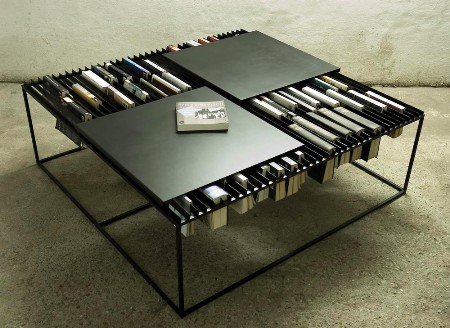
 Table Library
This masculine metal coffee table conceals a unique hanging book shelf. Link
Table Library
This masculine metal coffee table conceals a unique hanging book shelf. Link
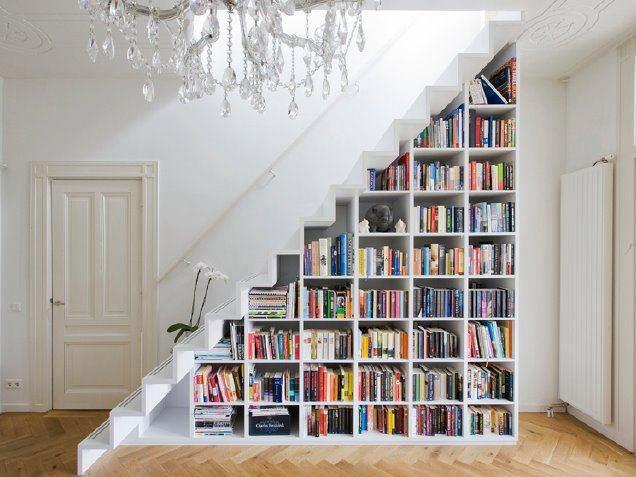
 Under- Stair Bookshelf
Creative way to use the empty space under stairs, adds on to the beauty of the living room. Link
Under- Stair Bookshelf
Creative way to use the empty space under stairs, adds on to the beauty of the living room. Link
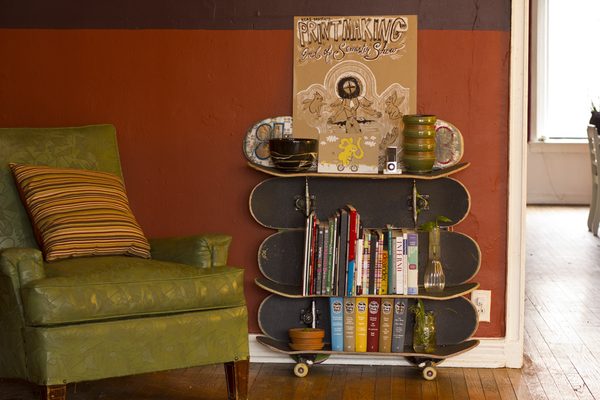
 Skateboard Bookshelf
Wonderful DIY project using the old worn skateboards.
Skateboard Bookshelf
Wonderful DIY project using the old worn skateboards.
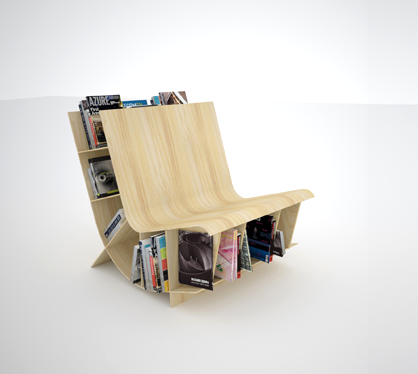
 Seat Bookshelf
If you are always looking for optimum storage space, this seat combined with book storage is perfect for you. Link
Seat Bookshelf
If you are always looking for optimum storage space, this seat combined with book storage is perfect for you. Link
 Rope Bookshelf
Based on the classic rope bridge this bookshelf is fun balancing act. Link
Rope Bookshelf
Based on the classic rope bridge this bookshelf is fun balancing act. Link
 Room Divider- Bookshelf
Custom bookshelf which serve the purpose of room divider as well. Link
Room Divider- Bookshelf
Custom bookshelf which serve the purpose of room divider as well. Link
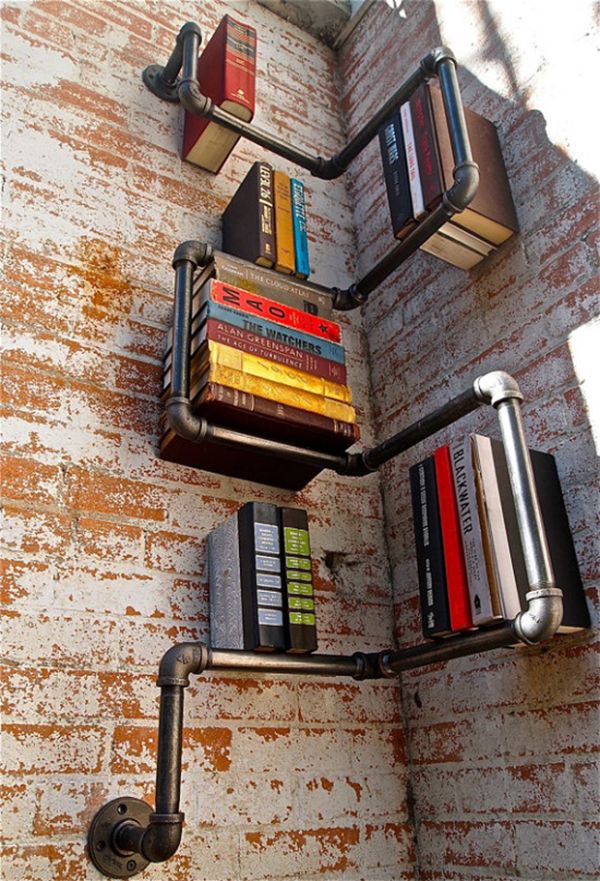
 Pipe Bookshelf
If you are into rustic look- living room, this intricate piping bookshelf is an interesting addition to the room. Link
Pipe Bookshelf
If you are into rustic look- living room, this intricate piping bookshelf is an interesting addition to the room. Link
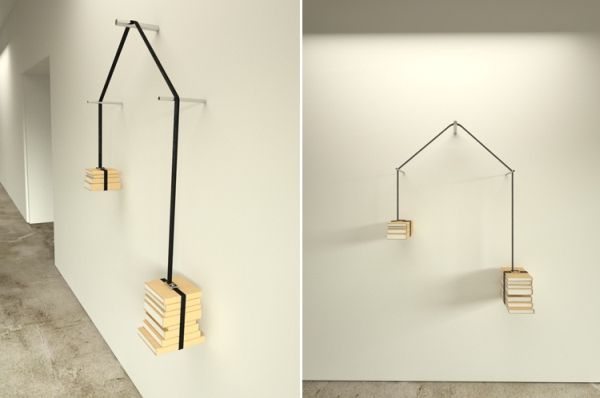
 Hanging Leather Book Case
Constructed of leather straps hung across supports. This creative bookshelf will let you measure your effort by physically weighing the balance of read-unread books. Link
Hanging Leather Book Case
Constructed of leather straps hung across supports. This creative bookshelf will let you measure your effort by physically weighing the balance of read-unread books. Link
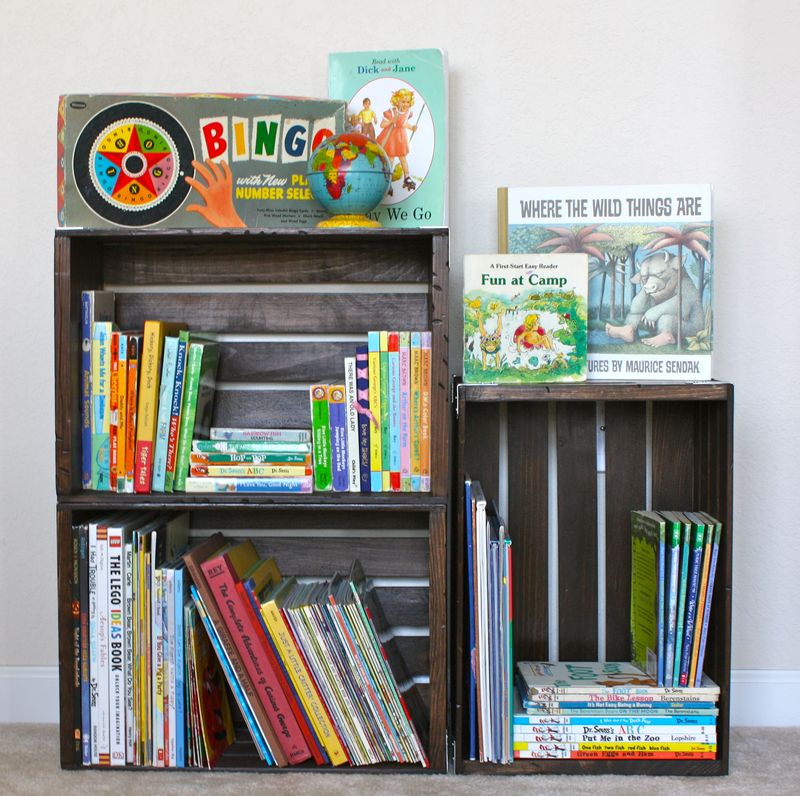
 Crate Bookshelf
Grab a few unfinished wooden crates and set to work. Click here to get the instructions.
Crate Bookshelf
Grab a few unfinished wooden crates and set to work. Click here to get the instructions.
Span, Anchoring, and Styling: Shelving That Holds Up
A foot of hardcover books is surprisingly heavy, and that weight is the reason shelves sag. As a working rule, a three-quarter-inch softwood or particleboard shelf carrying a full row of books will show a visible bow once the unsupported span passes about 32 inches, and cheap melamine gives up sooner. Hardwood, thicker stock, or a shelf stiffened with a wood strip glued along the front edge goes further, and a plywood shelf with a hardwood nosing performs better than solid pine of the same thickness. If a span has to be long, add a center support or a vertical divider. For manufactured units, look up the per-shelf load rating rather than guessing, and remember that a rating assumes evenly spread weight, not a stack of atlases in the middle.
Anchoring is not optional on anything tall or narrow. A loaded bookcase becomes top-heavy, and children climb shelves and pull on them, which is exactly how tip-over injuries happen. Fix the unit to the wall with the supplied strap or bracket, driving screws into wall studs wherever possible, since studs are usually spaced 16 inches apart on center and are easy to find with an inexpensive detector. Where a stud is genuinely unreachable, use heavy-duty toggle or expanding anchors rated for the load rather than plastic plugs. Put the heaviest books on the bottom, do not put a television on a bookcase that is not designed for one, and check the fixing again after you move the piece or shift the load.
Floating shelves follow the same logic with less margin. Their capacity is set entirely by the bracket and the fixing behind it, so a hidden-bracket shelf mounted into studs can hold books while the same shelf on drywall anchors alone should carry frames and a plant. Check the hardware's stated rating and keep the load close to the wall, because weight at the front edge multiplies the leverage trying to pull the bracket out.
With the structure sorted, styling is easy. A ratio around two-thirds books to one-third objects gives a shelf life without clutter: books provide the rhythm, and a few pieces of pottery, a small frame, or a plant provide the pauses. Group books in blocks rather than spreading them evenly, lay some flat in short horizontal stacks to break vertical monotony, and use those stacks as pedestals for small objects. Pull spines forward so they align with the shelf edge for a crisp line, leave a little empty space on every shelf, and let a mix of shelf heights carry both tall art books and paperbacks without wasted air above them.
Frequently Asked Questions
How far can a bookshelf span before it sags?
A three-quarter-inch softwood or particleboard shelf holding a full row of books usually starts to bow past roughly 32 inches of unsupported span. Hardwood, thicker stock, or a strip glued along the front edge as a stiffener will carry farther. For longer runs, add a center support or a vertical divider rather than hoping.
Do bookshelves need to be anchored to the wall?
Any tall or narrow bookcase should be anchored, because a loaded unit is top-heavy and tips easily when a child climbs or pulls on it. Use the supplied strap or bracket and screw into wall studs where you can. This is a genuine safety measure, not a finishing touch, and it takes only a few minutes.
How much weight can a shelf hold?
It depends entirely on the material, thickness, span, and how it is supported, so check the manufacturer's stated per-shelf rating rather than estimating. Those ratings assume weight spread evenly across the shelf, not concentrated in the middle. When in doubt, shorten the span or add a support and keep heavy volumes low.
How do you style a bookshelf so it does not look cluttered?
Aim for roughly two-thirds books and one-third objects, and group books in blocks instead of spreading them thinly across every shelf. Lay a few flat in short stacks to break the vertical rhythm and use them as risers for small pieces. Leaving some empty space on each shelf is what makes the rest look composed.
Can floating shelves hold books?
Only if the brackets are rated for that weight and are fixed into studs or heavy-duty anchors, since the hardware sets the limit rather than the shelf itself. Keep the load pushed toward the wall, because weight at the front edge increases the leverage on the fixing. On drywall anchors alone, stick to frames and light objects.
Related Posts
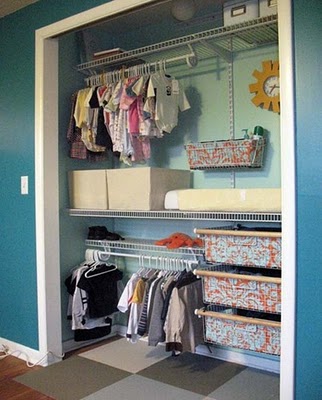
Creative Closet Ideas for Kids
Kids closet ideas built around reach: hanging rod heights by age, rotating seasonal clothes, and simple labels that help children dress themselves.

Creative Footstool Collection
How to pick a footstool or ottoman that works: matching seat height, upholstery that survives shoes, storage-lid safety, and using one as a coffee table.
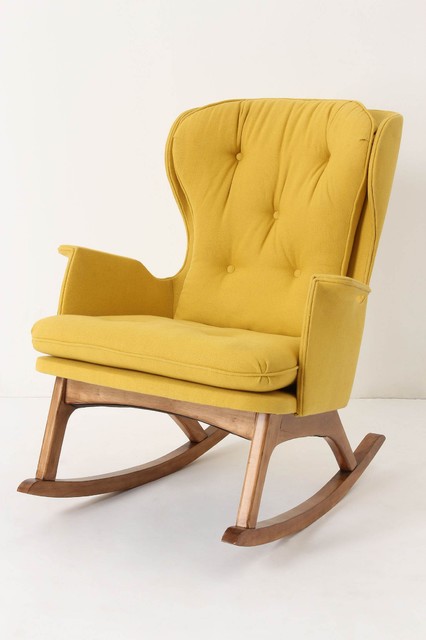
Modern Rocking Chairs
What to check before buying a rocker or glider: runner shape, wall clearance, floor protection, and arm height for feeding a baby or reading comfortably.

Why do drains gurgle and clear more slowly than usual?
5 Things to Remember when Drilling for Structural Repair
Comments (0)
No comments yet. Be the first to comment!