
Organizing Ideas- Shoe Storage Ideas

✨ Updated July 2026 — reviewed for accuracy and freshness.
Shoe storage fails for boring reasons: it holds fewer pairs than the household actually owns, it traps damp air, or it sits three steps from where shoes come off. Before you choose between a bench, a cabinet, or open cubbies, it helps to work out your real capacity and how air moves through whatever you build. That is what this guide covers, entryway first.
Key Takeaways
- Count real pairs first — plan a slot for every daily shoe, plus room for seasonal overflow.
- Airflow beats fragrance — damp shoes need to dry in open air before going behind a door.
- A bench changes behaviour — somewhere to sit is why shoes get put away at all.
- Depth is the hidden spec — adult shoes need roughly a foot of depth, boots need height.
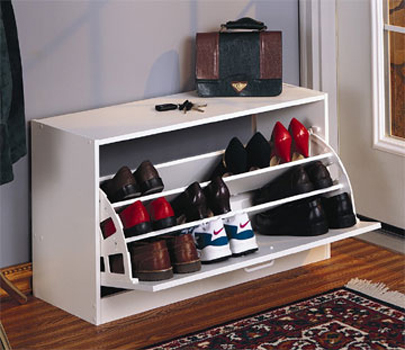
Simple cardboard DIY shoe rack for hallway. Link
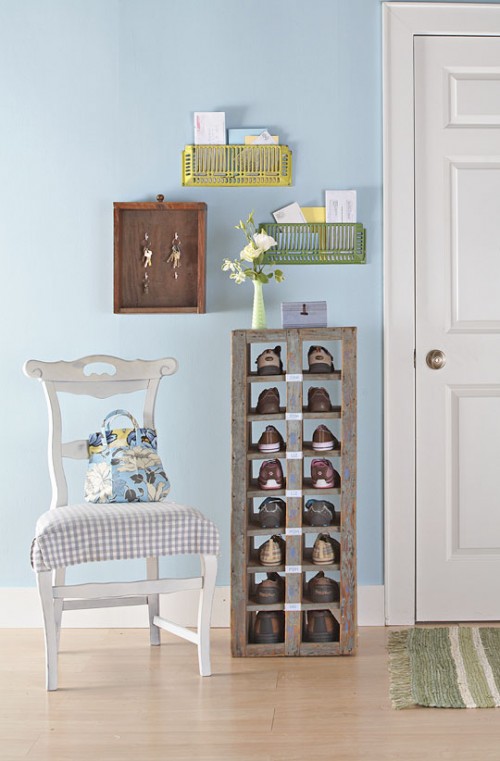
These sheet hangers are available in any super market, they make good storage for your daily shoes.
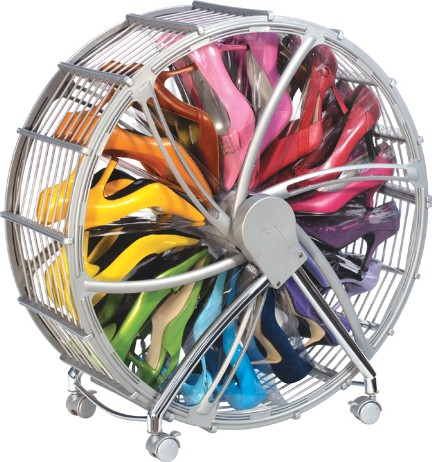
Creative and space saving circular shoe rack. Best fit for small spaces and probably tops the shoe storage ideas. Link
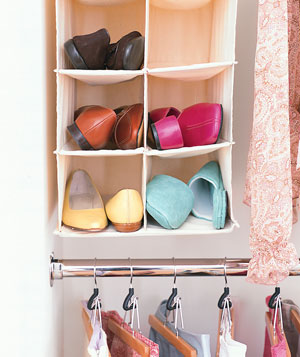
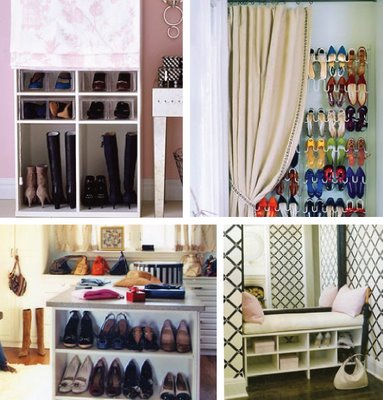
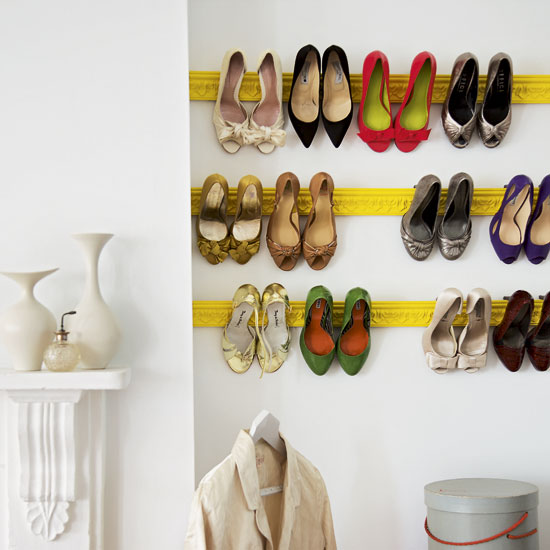
Make the most of hallway, stairs, windowsill bottom. Choose shoe pockets if you like displaying your collection.
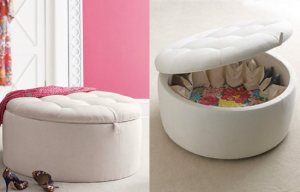
Any good upholsterer will be able to make you a custom made Ottoman you can use to store shoes, such as this one below.
Sizing and Building an Entryway Shoe System
Begin with an honest count. Gather every pair that lives near the door and separate the daily rotation from the occasional pairs, then plan storage for the daily group at the entry and send the rest to a closet. As a planning figure, allow about six inches of width and around a foot of depth per adult pair, and give boots their own taller section rather than forcing them flat. A household of four with two everyday pairs each needs roughly a dozen slots at the door once you add guests and a spare, which is usually double what people first imagine.
Airflow is the difference between storage that works and a cupboard you stop opening. Shoes come in damp from rain, snow, and simple wear, and a sealed cabinet holds that moisture against fabric and leather, which is what actually produces the smell. Build in slatted or wire shelves, leave the back open, or crack the door for a few hours if the unit is solid. Give wet shoes a night in open air on a lipped tray before they go away, keep a boot tray for slush and road salt, and use cedar blocks or activated charcoal rather than a scented spray that only masks the problem.
A bench is the piece that changes behaviour, because a person with somewhere to sit will actually take shoes off and put them where they belong. A comfortable perch sits around 17 to 19 inches from the floor, and you want roughly 30 inches of clear floor in front of it so someone can bend forward to tie laces without hitting the opposite wall. Under-bench cubbies are the most used storage in most entries, so put daily shoes there and reserve upper shelves or hooks for bags and keys.
Then decide how much you want to see. Open racks are faster to use, dry better, and suit households where shoes come off constantly, but they show every scuffed sole and demand a tidy line. Closed cabinets and tilting shoe drawers give a calm hallway and hide the mess, at the price of airflow and one extra motion, and every extra motion costs compliance. A common compromise is open cubbies below and a closed upper section for seasonal pairs. If you choose a tall narrow cabinet or a stacked tower, anchor it to the wall with the supplied bracket. Loaded tall furniture tips easily when a child pulls on a door or climbs a shelf, and that is a serious hazard rather than a theoretical one.
Frequently Asked Questions
How many pairs of shoes should an entryway hold?
Plan a dedicated slot for each person's everyday pairs, then add two or three for guests and weather-specific shoes. For most households that means eight to fourteen slots at the door, with everything seasonal stored elsewhere. Sizing for the peak rather than the average is what stops the overflow pile.
How do I stop a shoe cabinet from smelling?
The cause is almost always trapped moisture, so improve airflow before you add fragrance: use slatted shelves, leave the back open, or air out a solid cabinet regularly. Let damp shoes dry fully in the open before shutting them away. Cedar blocks, baking soda, or activated charcoal absorb what is left instead of covering it.
What is a good height for an entryway bench with shoe storage?
Around 17 to 19 inches puts most adults at a comfortable sitting height with feet flat on the floor. Leave roughly 30 inches of clear space in front so someone can lean forward to tie laces. If the bench also has cubbies underneath, keep at least seven inches of clearance for adult shoes.
Should shoe storage be open or behind doors?
Open storage is quicker to use and lets shoes dry, which suits busy households and damp climates. Closed storage keeps a hallway looking calm and hides wear, but needs occasional airing and adds a step that some family members will skip. Splitting the difference, open below and closed above, works in most entries.
How deep does a shoe shelf need to be?
About twelve inches of depth holds most adult shoes facing forward, and ten inches is usually enough for children's sizes or shoes stored at an angle. Angled or tilted shelves save depth in a narrow hall but hold fewer pairs per shelf. Measure the largest shoes in the house before you commit to a shallow unit.
Related Posts
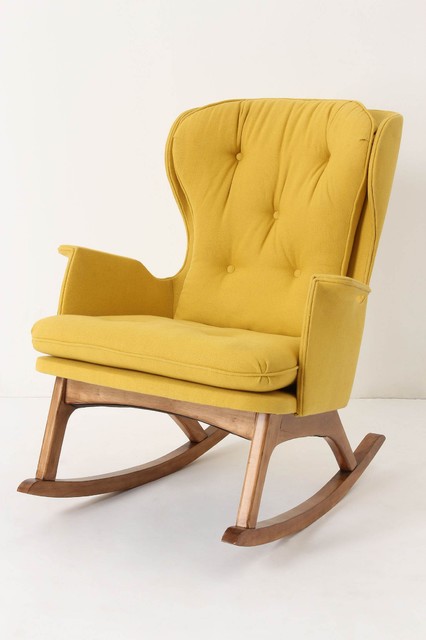
Modern Rocking Chairs
What to check before buying a rocker or glider: runner shape, wall clearance, floor protection, and arm height for feeding a baby or reading comfortably.
Hallway Design Ideas
Best Hidden Bed Ideas
5 Things to Remember when Drilling for Structural Repair

How to increase the value of your property
Comments (0)
No comments yet. Be the first to comment!