
Creative Kids Table

✨ Updated July 2026 — reviewed for accuracy and freshness.
A kids table is a work surface first and a cute object second, and the difference between one used daily and one that gathers laundry usually comes down to height. This guide covers matching table and chair dimensions to a child's actual size, choosing a top that survives paint and water, and setting the same table up for craft and for eating.
Key Takeaways
- Match the pair — a table surface should sit roughly 8 to 10 inches above the chair seat.
- Seat by size — toddlers suit a seat around 10 to 12 inches, older children need more.
- Feet flat — a child should sit with feet on the floor and elbows resting comfortably.
- Pick wipeable — sealed wood, laminate or coated steel outlasts raw board in a craft corner.
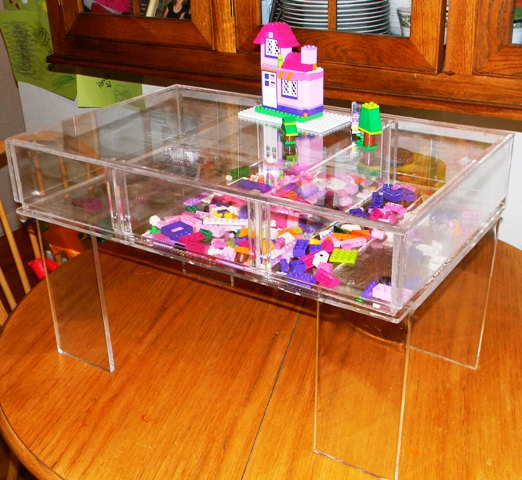
 Lucite Play Table
Beautiful hand crafted Lucite craft / Lego table for children. The clear Lucite top piece is removable to form a separate work table while the contents with in are easily organized by two removable dividers. Link
Lucite Play Table
Beautiful hand crafted Lucite craft / Lego table for children. The clear Lucite top piece is removable to form a separate work table while the contents with in are easily organized by two removable dividers. Link
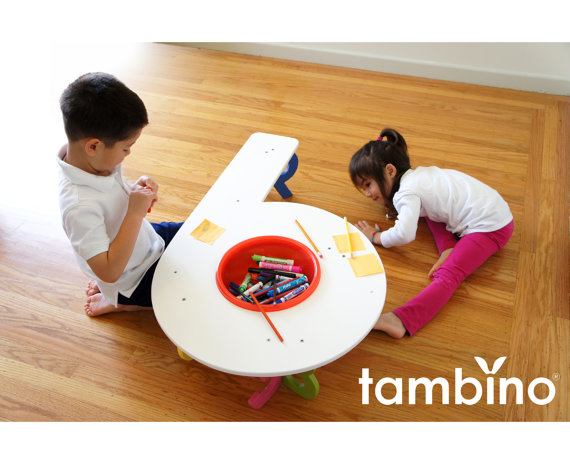
 Oversize 6 Table
Made out renewable solid American maple plywood and steel, this low to ground oversize 6 table is perfect choice for toddlers. Link
Oversize 6 Table
Made out renewable solid American maple plywood and steel, this low to ground oversize 6 table is perfect choice for toddlers. Link
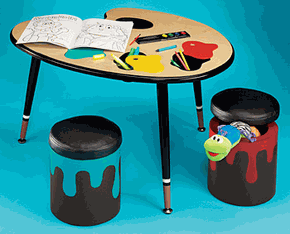
 Paint Table
Perfect choice for your little artist. Lot of space to store colors, brushes and color book.
Paint Table
Perfect choice for your little artist. Lot of space to store colors, brushes and color book.
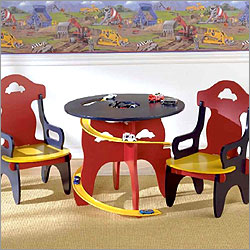
 Race Car Table
Perfect for little hot rods, the table features a built-in race car track, for Hot Wheels -size car. It goes perfect with race car bed. Link
Race Car Table
Perfect for little hot rods, the table features a built-in race car track, for Hot Wheels -size car. It goes perfect with race car bed. Link
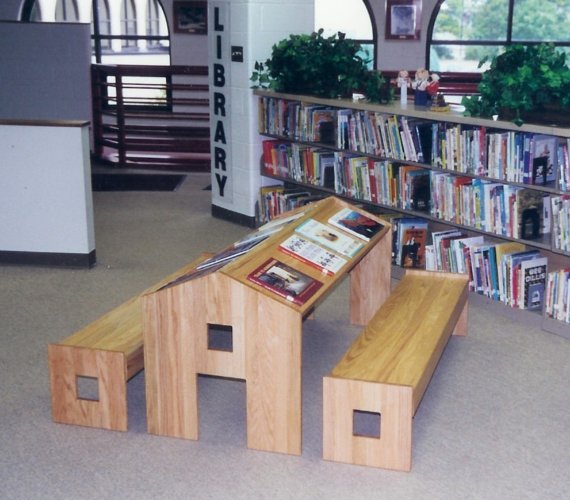
 Reading Table
Cutely designed to have a house shape, this reading table will definitely give reason to read more. Link
Reading Table
Cutely designed to have a house shape, this reading table will definitely give reason to read more. Link
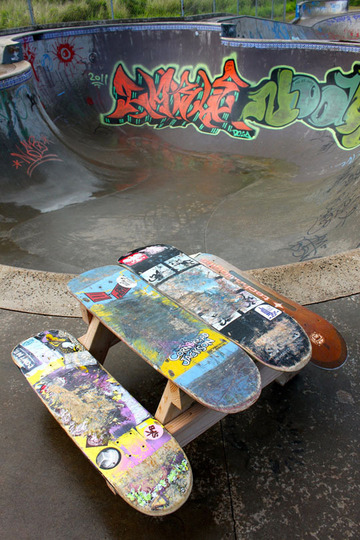
 Skateboard Table
The Skateboard picnic table is the perfect for outdoors or indoors activities.
Skateboard Table
The Skateboard picnic table is the perfect for outdoors or indoors activities.
Getting the Height and the Surface Right
Comfortable working posture for a child looks like it does for an adult: feet flat on the floor, knees at roughly a right angle, elbows level with or just above the surface, shoulders relaxed rather than shrugged. The rule that gets you there is the gap between seat and top, which wants to be about 8 to 10 inches. To be precise, measure floor to the back of the knee for seat height, then add roughly 8 inches for table height. Measuring beats the age range on the box, since two five-year-olds can be four inches apart.
As starting ranges, a toddler suits a seat around 10 to 12 inches with a top about 18 to 20 inches; a three to five-year-old wants a 12 to 14 inch seat and a 20 to 22 inch top; five to eight is usually 14 to 16 and 22 to 24 inches; and by nine a child heads for a 16 to 18 inch seat and a 24 to 26 inch top, on the way to dining height of about 29 to 30 inches. A firm footrest fixes a slightly tall chair, and check nothing under the top blocks knees.
Material decides whether the table survives. Sealed hardwood, high-pressure laminate and powder-coated steel shrug off water, glue and repeated wiping, while raw particleboard and unsealed fibreboard swell and lift at the edges the first time a cup goes over. Chalkboard tops need occasional reconditioning, and whiteboard stains permanently if a marker gets loose. Look for stated compliance with children's product safety standards on paints and finishes, rounded corners, no unlocked folding hinge that can pinch fingers, and a base wide enough that leaning on one edge will not tip it.
One table handles craft and eating if you decide which comes first. Craft favours recessed tubs for supplies, a paper roll at one end and a top you can genuinely scrub. Eating favours a flat continuous surface with no grooves catching crumbs. The compromise that works is a flat non-porous top plus a removable tray or silicone mat that comes out for messy sessions. Keep supplies nearby but off the table, so each session starts on a clear surface.
Placement matters more than it sounds. Put the table near natural light with room for an adult to sit opposite rather than jammed against a wall, and on a floor you do not mind protecting. Chairs of only a few pounds get pulled out and pushed back without help. Expect a well-chosen table to fit for around three years, which is why adjustable legs or a stackable design often earn their price.
Frequently Asked Questions
What height should a kids table be?
Work back from the chair: the top usually wants to sit about 8 to 10 inches above the seat. That puts most toddler tables near 18 to 20 inches, preschool tables near 20 to 22 inches, and early-school tables around 22 to 24 inches. Measure your own child's seated elbow height if you want to be sure, since age labels are only averages.
How do I know if my childs chair is too big?
Look at the feet and the shoulders. If the feet dangle, the chair is too tall, and if the shoulders lift toward the ears to reach the surface, the table is too high for that chair. A firm footrest solves a slightly tall chair, but a large gap between the two usually means the pair was never matched.
What table surface handles paint and glue best?
Non-porous tops win: high-pressure laminate, a properly sealed hardwood finish, or coated metal all clean up with a damp cloth and tolerate repeated scrubbing. Raw or lightly finished fibreboard swells as soon as it gets wet and never recovers. A wipeable top plus a silicone mat for the worst jobs is the most forgiving combination.
Can a kids table be used for meals as well as crafts?
Yes, as long as the top is flat and easy to wipe, with no deep grooves or open bins in the middle collecting crumbs. Recessed storage is handy for craft but awkward at mealtimes, so a removable tray insert gives you both. Deciding which use is primary makes the choice much easier.
How long will a child use the same table before outgrowing it?
Roughly three years is typical before the height stops fitting, though it depends on the child's growth and how the table was sized to begin with. Adjustable legs, stackable seating and a plain neutral top stretch that considerably. Buying a size that fits now rather than one they will grow into keeps posture right in the meantime.
Related Posts
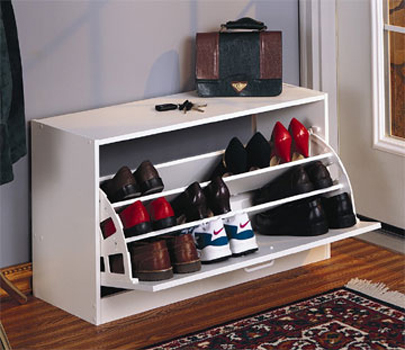
Organizing Ideas- Shoe Storage Ideas
Entryway shoe storage that holds: how many pairs to plan for, airflow that stops odour, bench height and depth, and when to hide shoes or leave them open.
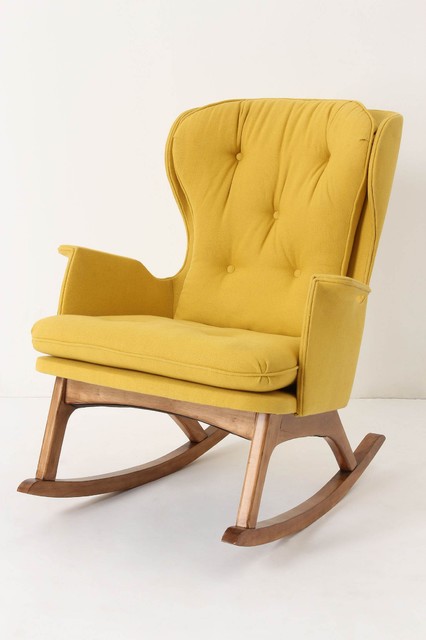
Modern Rocking Chairs
What to check before buying a rocker or glider: runner shape, wall clearance, floor protection, and arm height for feeding a baby or reading comfortably.
Seating Ideas for Outdoor Weddings
Vinyl and Metal Sidings
How to Put a Personal Stamp on Your Home
Comments (0)
No comments yet. Be the first to comment!